BEHIND THE PIXELS, THROUGH OUR LENS. - Your Insights into the world of machine vision.

BEHIND THE PIXELS, THROUGH OUR LENS. Immerse yourself in the world of machine and computer vision, where every image is more than just a collection of data and every pixel can be the key to better quality, higher efficiency, and smarter manufacturing. In this series, we take a true insider's look behind the scenes of industrial machine vision We go far beyond general buzzwords and highlight the concrete challenges and solutions that make a difference in practice. From choosing the right lighting to precise optical design, from simple test setups to advanced AI integration, we show what works, what doesn't, and why the crucial details often remain hidden.

What you won't find here

No marketing brochures disguised as blog posts, or polished hero stories.
Instead, honest insights.

I will talk about projects that almost failed before they succeeded.
About the moments when we questioned everything.
Or the small breakthroughs that felt like winning the lottery.
The mistakes that taught us more than any success ever could.

What you will find here

Real stories that happen every day in the world of machine vision happen.
Technical insights that truly matter. A look behind the scenes at how solutions are actually created.
And perhaps – just perhaps – a spark that ignites your next breakthrough.

Whether you yourself are facing an “impossible” vision challenge,
consider whether taking the leap into entrepreneurship is worthwhile,
or are simply curious about what happens when precision meets passion
– here you might find exactly what you're looking for.

Ready to look behind the pixels?

Every great system starts with a single pixel.
Every great company starts with a single idea.
Every great blog… well, it starts with a single post.
Let's see where this journey takes us. :-)

Perhaps you will recognize yourself in our stories.
Perhaps you'll find an idea for your next project here…
Blog Intro
Blog Series

Behind The Pixels

The technical "deep dives". How we solve complex machine vision and automation challenges. Why certain algorithms work while others fail. Which engineering decisions make the difference between success and failure. The "how" behind our solutions.

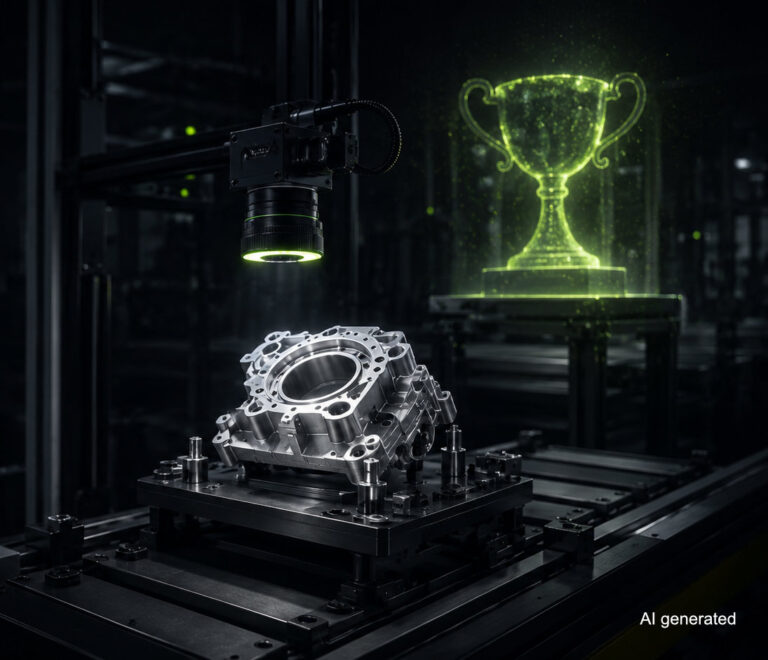
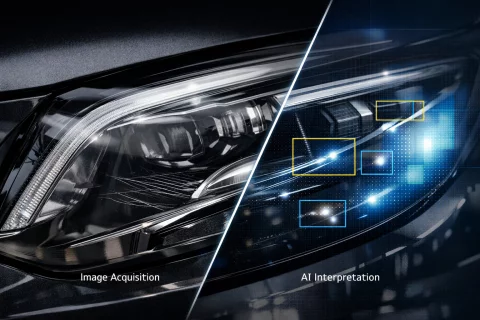
Is AI really the holy grail we've been searching for forever?

In recent years, AI has become a buzzword in machine vision, leading to it being regarded in many projects as almost the only possible solution. This sounds modern, high-performing, and often like a shortcut to a complex goal. In reality, however, a different picture repeatedly emerges: expectations are high, promises are big, but the actual results often fall significantly short of what was initially promised.

It is precisely at this point in projects that one not infrequently encounters what might casually be called "scorched earth." Investments have been made, hopes have been raised, and in the end, disillusionment remains above all else. Trust in AI-based approaches is damaged, even though the root cause is often not the technology itself, but its incorrect application. In such cases, AI fails not due to a lack of potential, but due to unsuitable framework conditions, inadequate system design, or unrealistic expectations.

Read more →

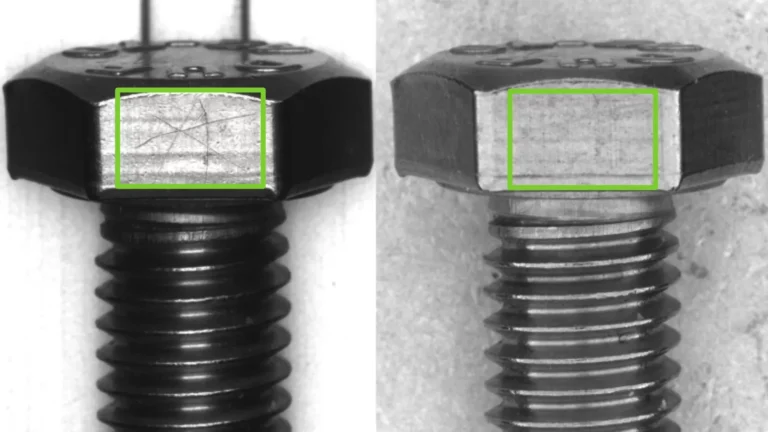
The biggest enemy for AI in machine vision: Physics

In this article, we explore how strongly the geometric and optical properties of the inspected object determine the design of a machine vision system—in other words, the substrate on which the features appear.

In practice, this is often where it is decided whether an inspection runs robustly or fails due to basic physics.

Read more →

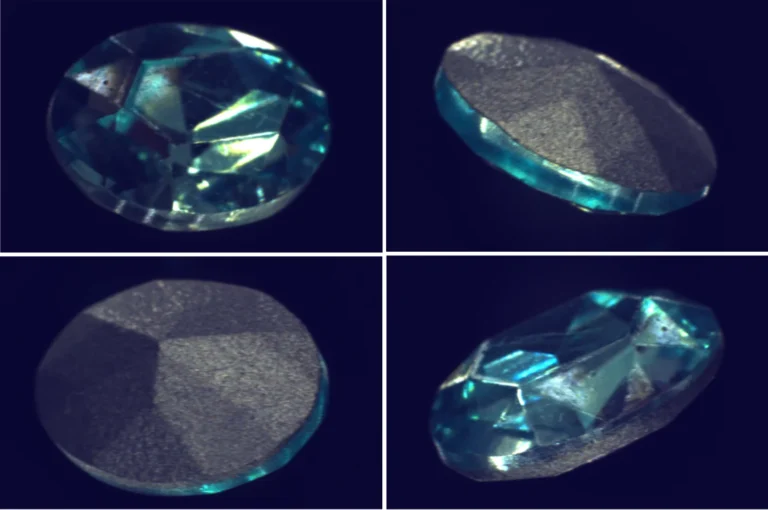
How to make features visible

In today's part, the focus is on what optical properties the relevant features possess – and what specific lighting strategies follow from this for a machine‑vision‑system

Read more →

The Spatial Distribution of Features

The first part of this series focused on the fundamental importance of image quality for AI-supported machine vision. Today, we examine another key aspect: How are the features to be inspected spatially distributed?

This aspect influences the planning and development of a machine vision system in several ways and immediately raises the question of the spatial integration options for a machine vision system.

Read more →

Why the quality of image data determines AI performance

AI in machine vision is not a new topic. Anyone who, like us, has been developing machine vision solutions for many years knows the typical situations during system commissioning all too well.

You would stand by the line with a dozen parameters in front of you, tweaking two values in the third decimal place until well past midnight, always hoping that "it finally runs stably now."

Today, those times at least seem to be largely behind us.

Is that a good thing? We would say: YES!

Even if we can often no longer transparently trace
which image features a model weights and how strongly in an individual case.

AI can do a lot. But it cannot work miracles.

Read more →

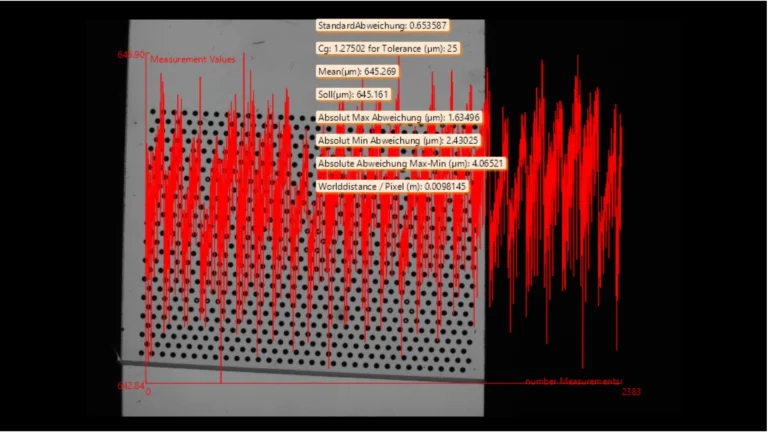
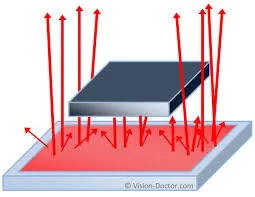
Incident light or transmitted light? Why lighting determines what we measure.

However, we do not want to provide a classic overview of possible lighting concepts at this point. There are plenty of those... trainings, whitepapers, tables. Everything is available.

Instead, we would like to take another look at measurement, specifically comparing incident light versus transmitted light. Because this is where things get really interesting.

Read more →

Why feasibility studies are indispensable.

I have been working with industrial machine vision for 27 years. During this time, I have designed, evaluated, and calculated more than 3,000 systems, a third of which ultimately went into full production.

You might think that after so many projects, you know exactly how to approach and solve a machine vision task. And yes, experience helps immensely.

Nevertheless, or perhaps precisely because of it: Experience does not protect against mistakes!

Read more →

Transmitted Light Illumination – Precision Begins with Clear Edges

In this part of our lighting series, we focus on transmitted light.

When we first show engineers a transmitted light setup, many consider it the simplest lighting technique of all. After all, you simply place the object between the light source and the camera, and essentially it is just shadow photography.

However, what we have learned over many years in metrology is that what looks simple on paper is actually one of the most powerful tools in industrial machine vision.

Read more →

Lighting in machine vision – Front lighting and diffused light

In machine vision, lighting conditions can be roughly divided into two types. Either the object is illuminated from the direction of the camera = classic front lighting, or it is captured in backlight. In backlighting, the camera points toward the light source and captures the object as a silhouette.

In this part of our lighting series, we focus on front lighting.
More specifically, on its most versatile representative: diffused light.

Read more →

How light affects image data in industrial machine vision

What the camera actually sees is not always what we expect.

Even with optimal camera positioning, perspective and occlusions can significantly impact image capture. Find out in our blog post why viewing angles are often underestimated and how costly mistakes can be avoided during the planning phase.

Read more →

Creating image data for industrial machine vision

For a long time, I found it difficult to truly understand what one of the early pioneers of machine vision once told me:

"You do not see reality; you only see the reflected light."

When you think about it long enough, it becomes almost a little eerie. Is what we see really there? With cameras, we can at least clearly prove it. We do not see the objects themselves, but rather the light that is reflected by them.

Read more →

Develop machine vision yourself or work with a system integrator?

Many companies face the same decision when planning a machine vision system: "Do we develop internally or rely on external expertise?"

There is no universally valid answer, but four factors are crucial: Expertise, time, budget, and complexity.

Even if you have internal know-how in the areas of image capture, lighting, optics, algorithm selection, integration, and maintenance, the path from prototype to series production is often much longer than expected.

Read more →

The limits of artificial intelligence

AI-based machine vision has proven to be a valuable tool for many applications to detect defects that are easily recognizable to the human eye but difficult to describe using IT rule sets.

Such tasks were previously impossible to solve, or could only be solved with considerable effort. In addition, AI technology now makes it possible to solve certain tasks faster and more easily than was previously the case with rule-based machine vision.

Read more →

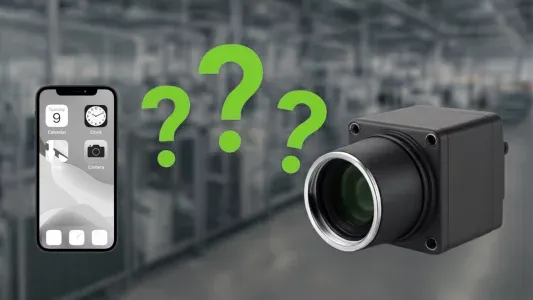
Why a smartphone camera is not enough for industrial machine vision

We often hear: “My smartphone camera takes fantastic photos, why do I have to pay for a machine vision system "Use expensive industrial cameras?"

The answer is simple:

Because good-looking pictures are not the same as technically precise and repeatable measurement results.

Read more →

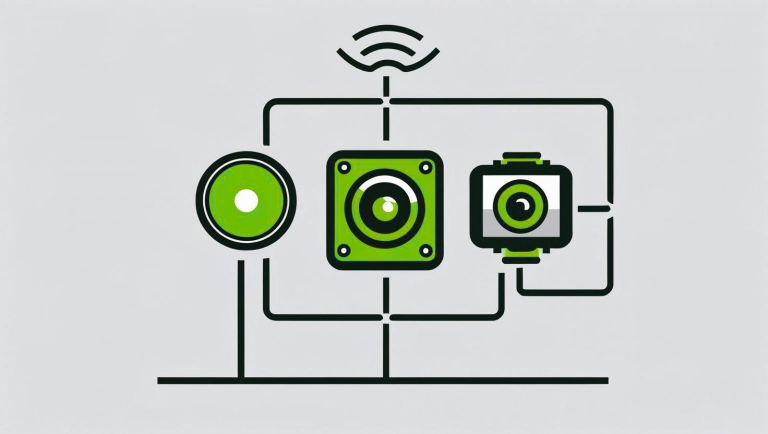
Which technology is best suited for which application?

Sometimes a small decision makes a big difference:
Can I solve my task with a smart camera? Do I need the flexibility of an industrial camera, or could a simple sensor handle the task as well?

In this article, I would like to highlight the scenarios where each technology excels and which solution is the right one for your specific challenge.

Read more →

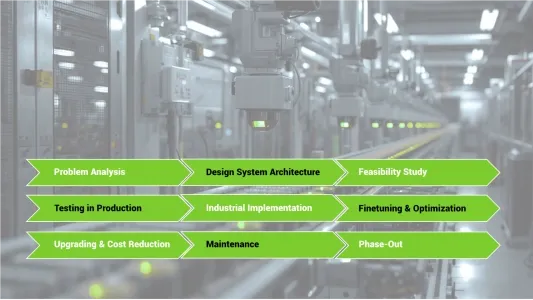
From vision to reality

Every machine vision project begins with a problem and ends with a solution you can rely on. In between lies the crucial difference between an expensive experiment and a reliable system.

From the outside, it looks simple: one camera, one lighting setup, one result. Yet behind every functioning system lies a process that turns „impossible” into „indispensable”.

Read more →

The challenges of machine vision in industrial automation

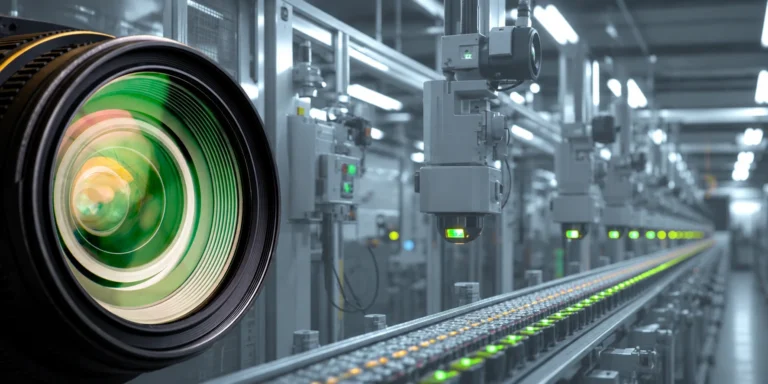
From the outside, machine vision usually appears simple. A conveyor belt runs, a camera is triggered, a green light flashes. Done!
But I know from experience: This brief green flashing is the result of highly complex processes .

Every system I have implemented has taught me the same lesson: In machine vision "simple" is the most challenging thing you can achieve .

Read more →
Blog Series

Through Our Lens

The human side of our work. Our story, the struggles nobody talks about, the unexpected turns that can change everything, and what it's really like to be a "generalist" who has to solve highly specific, complex problems every day.

The story behind phil-vision

Sometimes great stories start quite unspectacularly. For us in 2015, it was a cancelled football project and two friends who were tired of just talking about technology. United by a shared passion to turn complex challenges into practical solutions.

That is how phil-vision was born. Not out of a business plan, but out of pure enthusiasm for machine vision and the courage to build something of our own.

Read more →

Pixels, projects, precision – Gregor

Whether it is football tracking, raptor detection, or electronics inspection, I love projects that combine precision and innovation.

In this post, I want to share how I learned that the best solutions often stem from the most unexpected combinations and why pixels are more to me than just tiny color fields.

Read more →

4 cubic meters, 8 seconds, 0.1 mm – Patrick

When others say "impossible",
I hear "interesting challenge" 😊

Just like the task of capturing a measurement volume of 4 cubic meters in 3D in just 8 seconds with a precision of 0.1mm. A project that initially seemed unsolvable until it ultimately worked perfectly.

In my blog, I share how we achieved this
and why exactly these kinds of machine vision tasks
thrill me.

Read more →

Standards, Stability & Security – Rupert

While others constantly chase the latest features, I am drawn to something else—something often much more demanding: creating systems that will still run reliably a decade from now.

My work on the standardization committees for GenICam and GigE Vision has confirmed to me that true innovation lies not only in new features, but above all in the solid foundations upon which everything else is built.

Here, I want to share why standards are the key to exceptional, sustainable projects.

Read more →

When things get tight, things get exciting.

Where focus, experience, and passion meet state-of-the-art machine vision, turning challenges into high-performance machine vision solutions.

During peak times, our workspace sometimes looks a bit like a creative chaos lab: cameras, lenses, cables, lighting, and test charts everywhere, and right in the middle, our engineers working with utmost concentration (and the occasional extra cup of coffee) on a wide variety of projects in parallel.

While a high-speed system for the food industry is taking shape on one table, the final calibration for coin inspection is already underway on the next. And when the lab and production eventually run out of space, we simply improvise. Desks become test setups, and the conference room table turns into a makeshift production line.

Read more →

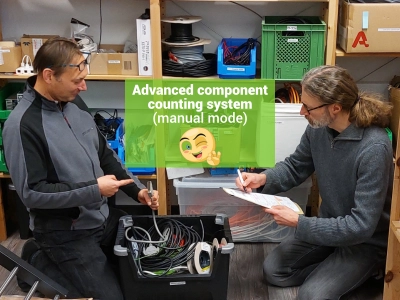
The day we count cables instead of pixels

There are days at phil-vision when we write code, refine lighting concepts and optimize machine vision systems down to the very last pixel…
… and then there are inventory days.

Instead of algorithms, we suddenly find ourselves counting cables.
Individually. Carefully.
While quietly thinking that we would actually rather be programming.

Everything is running smoothly.
Until it isn't…

Read more →
Your idea — our solution

Challenge us!

We are happy to provide you a free consultation on any type of inquiry, no matter how unusual it may be.

Call us at +49 89 125094350, or send us your requirements directly by email. Alternatively, you can use the button in the menu bar to book an appointment directly for a free initial consultation.