
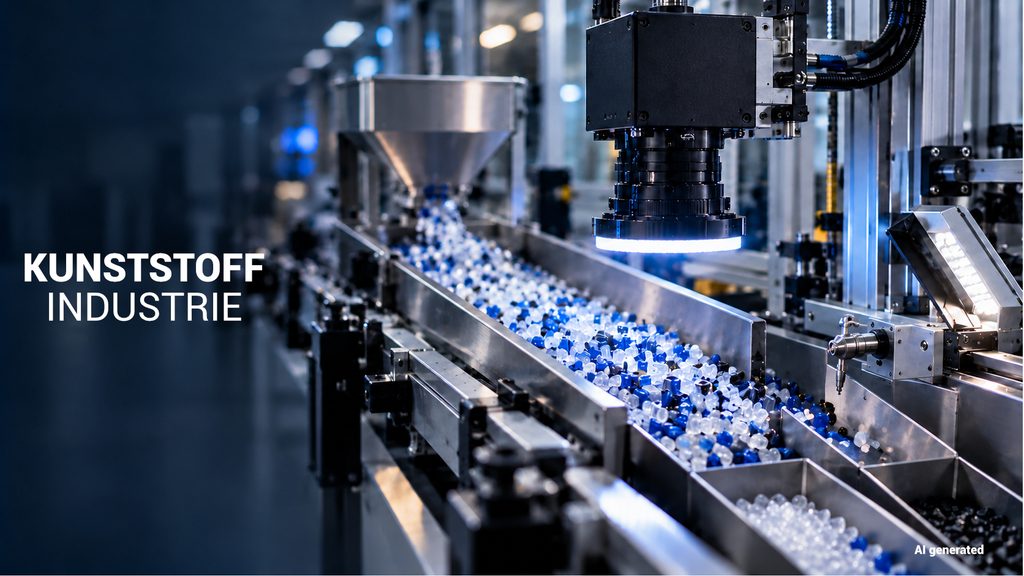
Machine vision for the plastics industry

INSPECT. SORT. ENSURE QUALITY.

Automated quality control for plastics, injection molding, and films

Plastic products, pellets, and films exhibit very different inspection characteristics depending on the material, surface, and manufacturing process. Transparent, glossy, or textured surfaces, varying colors, complex geometries, and high production speeds place special demands on cameras, optics, lighting, and image processing.

phil-vision develops systems for automated inspection, measurement, sorting, and classification of injection-molded parts, extrusion products, plastic pellets, films, and technical plastic components. The systems check components for dimensional and form accuracy, sort pellets according to defined quality criteria, and continuously monitor films for local defects and material deviations. Defective products or materials can be detected and rejected immediately, making process deviations visible at an early stage.

  • Automatic quality control directly in production
  • Inspection of dimensional and form accuracy
  • Reliable sorting and classification
  • Continuous film inspection even at high web speeds
  • Reduction of scrap and customer complaints

Typical application areas for machine vision in the plastics industry

Film Inspection

Continuous inspection of plastic films for gels, fish eyes, inclusions, cracks, holes, thin spots, streaks, bubbles, discoloration and contamination, variations in surface structure, transparency, and adhesive distribution.

Pellet sorting

Detection and classification of pellets by color, shape, size, and quality. Foreign materials, impurities, or defective pellet grains can be identified and automatically sorted out.

Detecting injection molding defects

Inspection for flash, short shots, sink marks, warpage, excess material, and other manufacturing-related deviations.

Surface inspection and completeness check

Detection of scratches, cracks, discoloration, inclusions, contamination, and other local surface defects. Inspection of clips, seals, inserts, and assembled components for presence and correct position

Dimensional and form accuracy inspection

Control of contours, diameters, bores, wall thicknesses, and other geometric features. Deviations such as warpage, deformations, or incompletely formed areas are reliably detected.

Color and variant inspection

Detection and assignment of different materials, colors, and product versions.

Would you like to automatically inspect plastic parts or films, or reliably sort plastic pellets? Share details such as material properties, throughput, and production speed with us. We will evaluate feasibility and develop the matching machine vision solution.

Frequently Asked Questions

What defects can be detected on plastic parts using machine vision?

Typical defects include flash, short shots, sink marks, warpage, deformations, cracks, scratches, discoloration, inclusions, and contamination. We verify which features can be reliably detected using sample parts.

Can transparent or glossy plastic parts be inspected?

Yes, although transparent, reflective, or structured surfaces place special demands on lighting, optics, and image processing. Through suitable lighting techniques, filters, and camera technologies, many of these applications can be successfully solved.

What defects can be detected in films?

Potential defects include specks, gels or fisheyes, inclusions, holes, cracks, bubbles, streaks, thin spots, discoloration, and contamination. In addition, properties such as coating homogeneity, surface structure, transparency, and adhesive distribution can be monitored. Inspection can take place continuously during production.

Can the dimensional accuracy and shape of plastic parts be tested automatically?

Contours, holes, distances, angles, diameters, and other geometric features can be measured non-contactly and compared with defined tolerances or a reference part. This allows warping, deformation, and other deviations in shape and dimensional accuracy to be detected.

Can plastic granules be automatically inspected and sorted?

Yes. Plastic granules can be classified, for example, by color, size, shape, and defined quality criteria. Contaminants, foreign materials, or defective granules can be detected and ejected using a suitable sorting device.

Can different product variants be inspected with a single system?

A machine vision system In many cases, it can manage multiple product types and variants. Switching between them is done, for example, via machine control, a product ID, or automatic recognition.

Can defective parts be automatically ejected?

The inspection system can transmit the results to the machine control system or a sorting device. This allows defective parts, foreign materials, or granules that do not meet specifications to be marked or automatically ejected. The specific implementation depends on the existing equipment and the required throughput.

Your idea — our solution

Challenge us!

We are happy to provide you a free consultation on any type of inquiry, no matter how unusual it may be.

Call us at +49 89 125094350, or send us your requirements directly by email. Alternatively, you can use the button in the menu bar to book an appointment directly for a free initial consultation.