
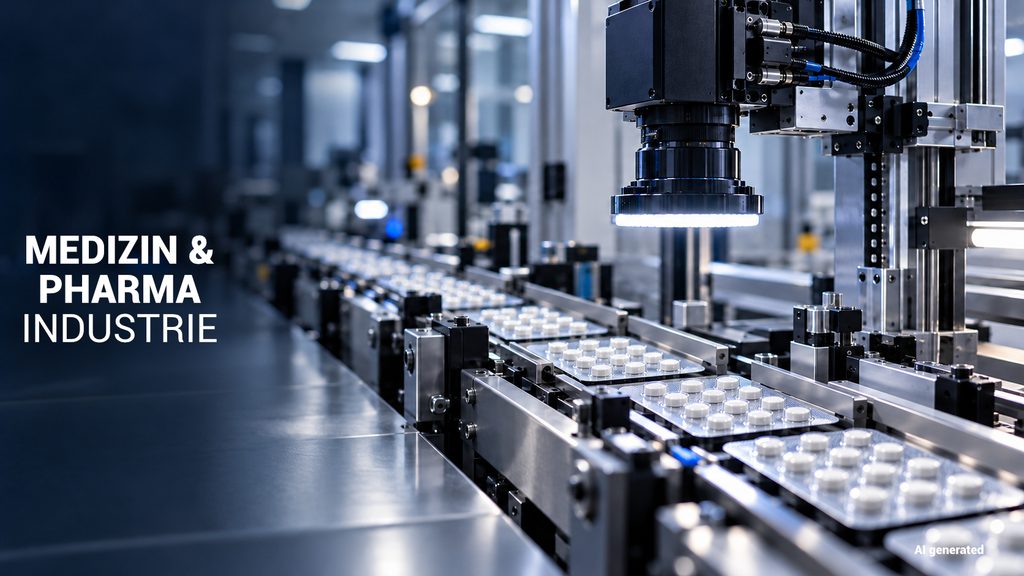
Machine vision systems for reliable processes and quality in medicine, pharmaceuticals, and laboratories
Reliable inspection processes and traceable results are particularly important for medical technology and pharmaceutical products. Even minor deviations in products, samples, packaging, or labeling can impair further processing, functionality, or safe use.
The camera-based systems from phil-vision support the automated inspection of products, components, packaging, and laboratory samples. They read codes and plain text, identify sample containers, and can analyze visually detectable sample characteristics. Inspection images, measurement values, and results can be linked with batch, serial, or sample information to support track-and-trace and documentation tasks. The specific solution is tailored to the product, process, laboratory environment, and required interfaces.
- Reproducible inspection of relevant product and sample characteristics
- Clear identification through code reading and OCR
- Support for automated laboratory and handling processes
- Traceable assignment and tracking
- Documented inspection and measurement results
- Integration into production, packaging, and laboratory automation systems
Typical applications for machine vision in medicine and pharmaceuticals
shape & dimension
Non-contact measurement of syringes, needles, ampoules, seals, and other medical or pharmaceutical components.
Sample analysis
Camera-based inspection of visually detectable sample characteristics such as color, fill level, geometry, homogeneity, or the presence of visible particles.
Laboratory automation
Detection, identification, and position determination of sample vessels and laboratory containers for automated handling, sorting, and analysis processes.
Completeness check
Inspection of sets, blisters, sample carriers, contents, and assembled components.
Serialization, Track & Trace
Linking product, batch, serial, or sample information with inspection and process data to ensure traceable assignment across individual process steps.
Documentation
Storage of inspection images, measurement values, results, defect classes, and identification data. The scope, data structure, and interfaces are adapted to the respective requirements.
Surface inspection
Detection of cracks, scratches, contamination, and material defects on products and containers.
Reading and verifying codes
Reading and verification of barcodes, QR and DataMatrix codes, as well as batch, serial, and sample markings.
Fill level and closure inspection
Inspection of ampoules, vials, sample containers, and other vessels for correct filling and complete closure.
Print and label inspection
Inspection of labels, batch numbers, expiry dates, mandatory information, and other printed details for legibility, completeness, and correct assignment.
Film and seal seam inspection
Inspection of blister materials, coatings, packaging films, and sealed areas.
Would you like to automatically inspect, identify, and document products, packaging, or laboratory samples? Send us sample parts or representative samples, along with details on inspection characteristics, process flow, cycle time, and required interfaces. Based on this, we will examine the technical feasibility and develop a suitable solution.