
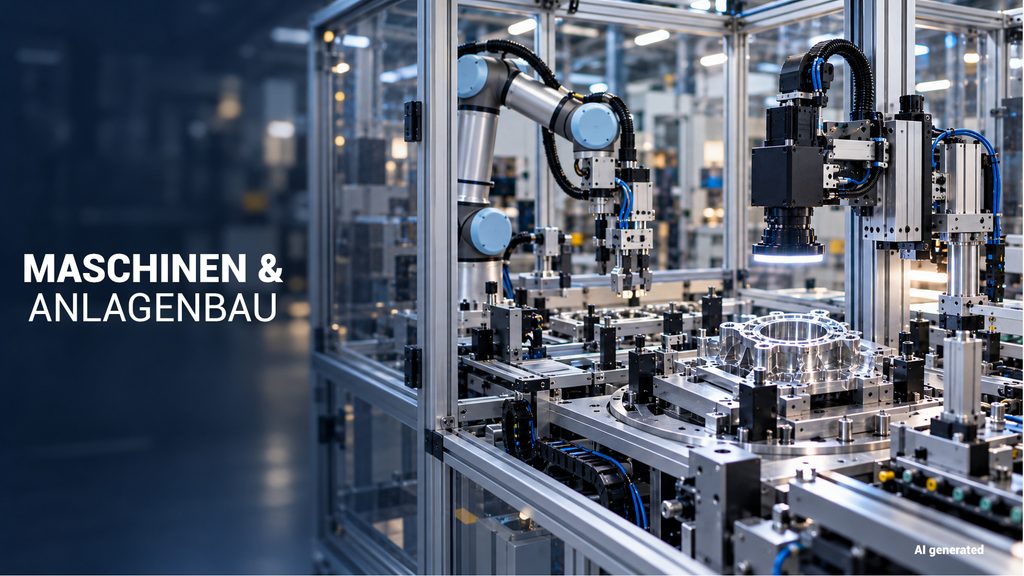
Machine vision for machinery & plant engineering

DEVELOP. INTEGRATE. AUTOMATE.

Seamlessly integrating machine vision into machinery

Machine vision is a core component of modern machinery and automated production systems. For a system to operate reliably in industrial environments, cameras, optics, lighting, software, mechanics, robotics, and controls must work together precisely.

phil-vision supports machine builders and OEMs from feasibility analysis, system design, and software development to integration and commissioning. Our solutions automate inspection, measurement, positioning, and handling tasks and can be integrated into both new machines and existing systems.

If a complete automation or inspection system is required beyond machine vision, we work closely with specialized partners. This creates coordinated overall solutions in which machine vision, mechanics, robotics, control, and safety technology seamlessly interlock.

  • A single point of contact for machine vision and system integration
  • Manufacturer-independent design of cameras, optics, and lighting
  • Precise positioning and measurement using 2D and 3D technology
  • Automated and reproducible quality assurance
  • Integration into PLCs, robot controllers, and higher-level systems
  • Support from prototype to series production machine
  • Complete inspection and automation solutions in collaboration with partners

Typical application areas for machine vision in Machinery & Plant Engineering

Automated quality assurance

Inline inspection of components and products for surface defects, damage, completeness, assembly status, and other defined quality characteristics.

Positioning & Control

Determination of the position, location, and orientation of objects. The results can be transferred to robots, PLCs, or machine controllers and used for gripping, processing, assembly, or sorting processes.

Robot Guidance & Automated Handling

Transfer of 2D or 3D position data to robot systems for pick-and-place, assembly, loading, and processing tasks.

shape & dimension

Precise non-contact measurement of turned, milled, stamped, cast, and plastic parts. Controls can include lengths, diameters, angles, boreholes, contours, and distances, for example.

3D Inspection

Capture of complex geometries and comparison with reference objects, CAD data, or defined tolerances.

AOI & Testing Systems

Integration of machine vision into automated optical inspection systems, test stations, or special-purpose machines. Mechanics, robotics, control engineering, and safety technology can also be implemented together with partners.

Process Monitoring & Documentation

Visual monitoring and recording of fast or hard-to-reach machine sequences for error analysis, process optimization, and documentation.

Pass/Fail Decision & Process Control

Transfer of inspection results to the machine controller so that faulty products can be marked, ejected, or reworked.

OEM Integration

Development of scalable hardware and software modules that can be integrated into various machine types and complete machine series.

Are you developing a new machine, planning an automated inspection system, or looking to expand an existing process? We support you with feasibility analysis, machine vision, measurement, positioning, software, and integration. Together with our automation partners, we can also implement complete testing and special-purpose machine solutions if required. Challenge us

Your questions, our answers

What services does phil-vision provide for mechanical engineers and OEMs?

We provide support ranging from feasibility analysis and system design to the selection of cameras, optics, and lighting, as well as software development, interface integration, and commissioning. The focus is on machine vision and its reliable integration into the machine architecture.

Are complete automation and testing systems also possible?

Yes. If additional mechanics, robotics, testing technology, or special-purpose machine construction are required, we work together with specialized partners. This allows machine vision, control, handling, and testing technology to be combined into a coordinated overall solution.

Can machine vision systems be integrated into a new machine series?

We develop scalable hardware and software concepts that can be integrated as modules into machine series. In doing so, we take into account space requirements, costs, cycle times, interfaces, operation, and maintainability.

Is it possible to retrofit existing machines?

Many systems can be retrofitted with machine vision. We check the mechanical conditions, available space, existing interfaces, and required cycle times in advance.

What interfaces to machine controls are possible?

Communication can take place, for example, with PLCs, robots, databases, or higher-level production systems. Test results, measured values, and position data are transmitted via an interface that matches the existing system architecture.

How does machine vision support positioning and control?

Camera systems determine the position, location, and orientation of components. This information can be used for robot guidance, tool positioning, assembly, processing, or sorting, and passed on to the respective control system.

Which measurement tasks can be automated?

With 2D and 3D machine vision, contours, lengths, diameters, angles, holes, distances, heights, and complex geometries can be captured non-contactly, among other things. The measured values can be compared with tolerances, reference parts, or CAD data.

How is machine vision used for quality assurance?

Machine vision checks components and products for defined quality characteristics in a reproducible manner. These include, for example, surface defects, dimensional deviations, missing components, incorrect assembly states, or faulty alignments. The results can be documented and transferred to the system control.

Does phil-vision also support robotics applications?

Yes. With 2D or 3D machine vision, the position, location, and orientation of objects can be determined and transmitted to a robot system. Typical tasks include pick-and-place, assembly, machine loading, and processing.

How is it checked before the start of a project whether an application will work?

As part of a feasibility analysis, we examine sample parts and relevant defect patterns under realistic conditions. This allows the suitable process, the required components, and potential technical risks to be determined at an early stage.

Your idea — our solution

Challenge us!

We are happy to provide you a free consultation on any type of inquiry, no matter how unusual it may be.

Call us at +49 89 125094350, or send us your requirements directly by email. Alternatively, you can use the button in the menu bar to book an appointment directly for a free initial consultation.