
Integration into Existing Production Lines
A machine vision system is almost never designed from scratch without constraints. Typically, the optical inspection system is intended to be integrated into an existing system. Installation space, cycle time, mechanics, and process control are already defined.
And sometimes it quickly becomes clear: Physics cannot be outsmarted.
If only 100 mm of installation space is available, but at the same time an inspection area of 250 × 250 mm needs to be covered with the required resolution, a single-camera solution simply reaches its limits. In such cases, alternative concepts are needed instead of wishful thinking.
Let us assume in the following that basic parameters such as focal length, minimum object distance (MOD), and depth of field are fundamentally feasible. Then other questions move into focus.
Ratio of Inspection Area to Feature Size
How large is the area to be inspected? And how small are the relevant features in comparison?
This ratio determines, among other things:
- Number of required cameras, lenses, and lighting setups
- Definition of potential overlap areas
- Calibration requirements
- Synchronization of image captures
The larger the field of view combined with high detail requirements, the more complex the system architecture becomes.
Surface Geometry
Is the area to be inspected flat, curved, or stepped?
Surface geometry directly influences the requirements for depth of field and thus the optical design of the system.
Possible approaches include:
- Increasing the depth of field through a smaller aperture
- Using focus stacking techniques
- Using liquid lens systems
- Alternatively, a robot-guided scanning process with one or more line-scan or area-scan cameras
Not every solution is process-stable or economically viable. The key factor is the interplay between mechanics, optics, and cycle time.
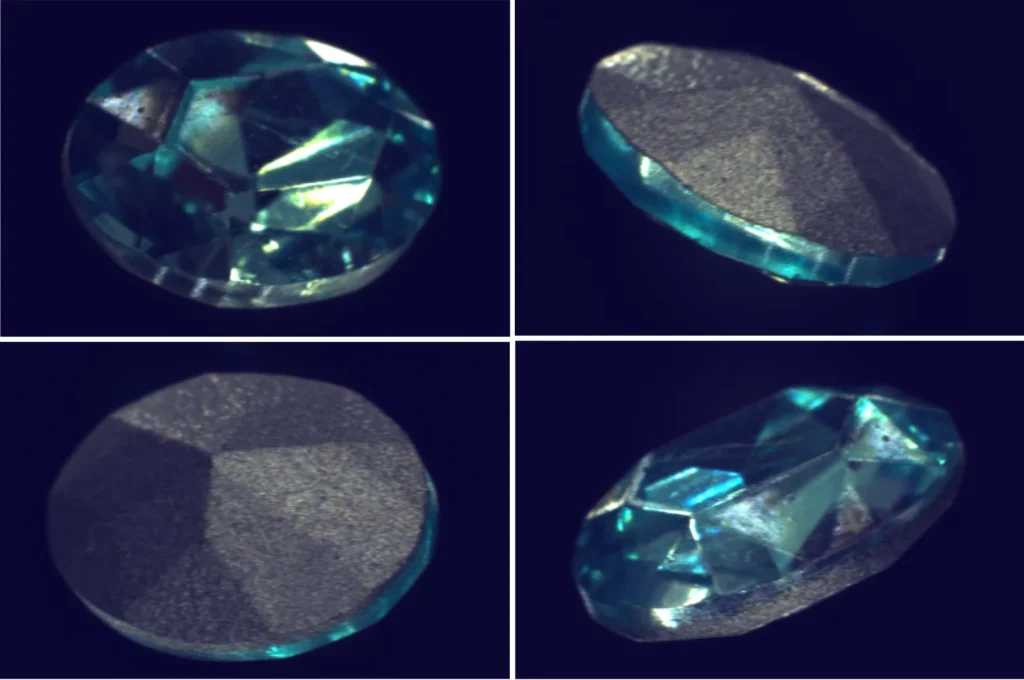
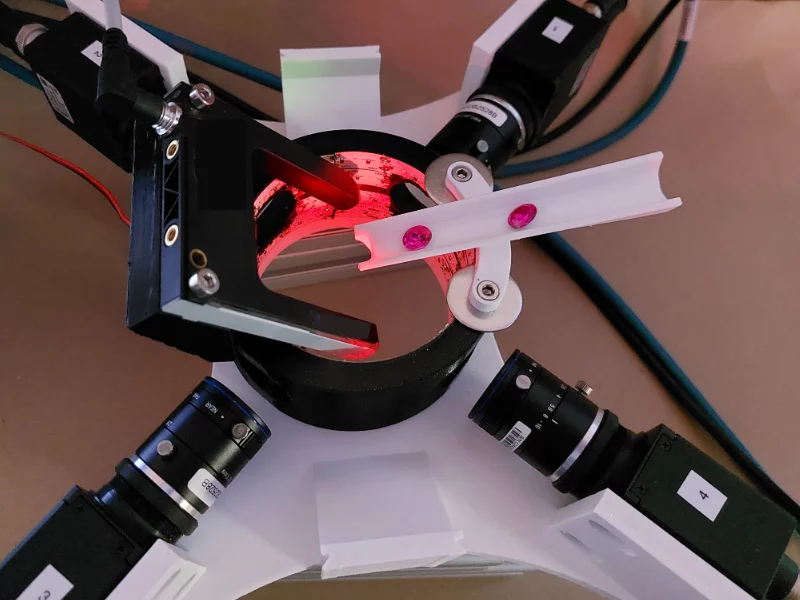
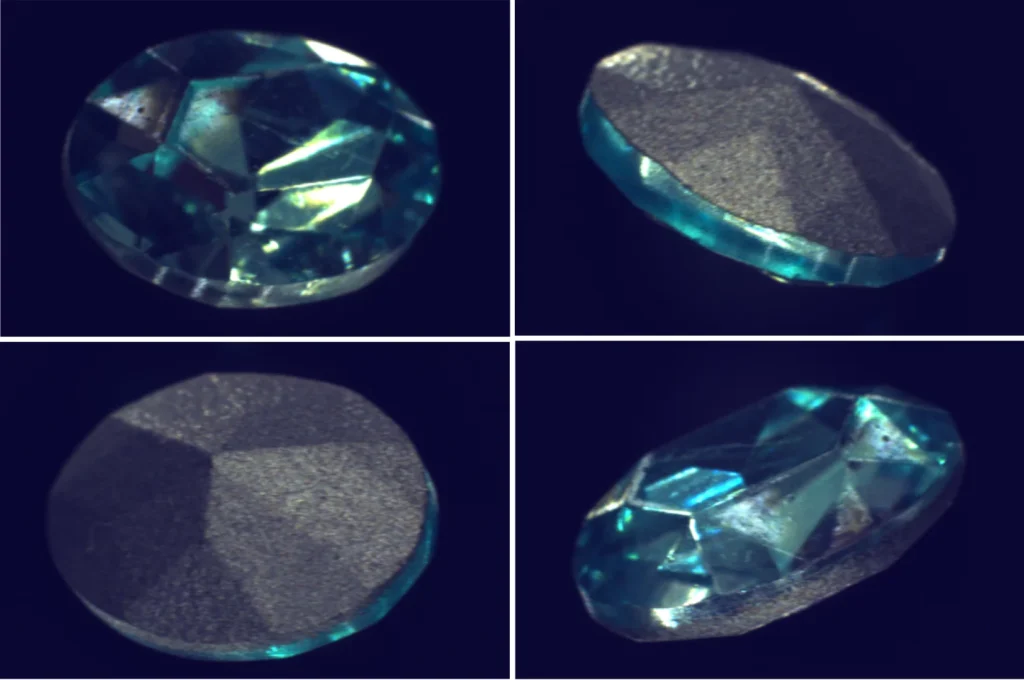
Number of sides to be inspected
Does only one side need to be checked, or multiple?
This question directly determines:
- Total number of cameras, lenses, and lighting setups
- Assessment of whether tracking or rotation of the object is necessary
Especially with multi-sided inspections, it becomes clear how strongly the spatial distribution of features shapes the system architecture.
Impact on system architecture
Today's post therefore focused on where and how relevant structures appear in the field of view.
The spatial distribution is not a minor detail.
It is one of the fundamental parameters in the design of AI-based machine vision systems.
In the next part of the series, we will turn our attention to the optical properties of the features themselves.
Reflective or diffuse? Transparent, glossy, or matte?
Because this is often where it is decided which lighting strategy really works and whether the AI ultimately sees what we think we see.