
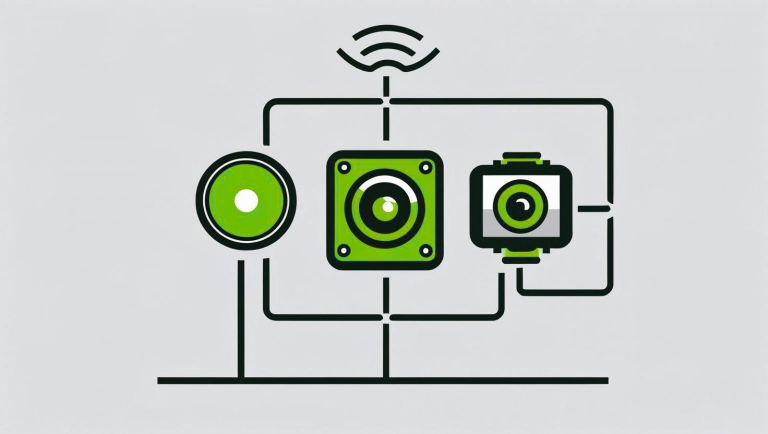
Whenever someone asks me which technology they should use, my answer is simple (and never changes):
IT DEPENDS
Sensors: Fast and robust
Ideal for simple yes/no decisions, low resolution, and basic applications. Quick to set up, easy to use. Particularly suitable for applications that do not require high computing power. If all you need are simple trigger functions, a sensor is often the cleverest choice.
Smart Cameras: Compact and powerful
All-in-one devices that combine camera, processor, and machine vision. Ideal for reading barcodes and handling simple to moderately complex tasks such as 2D robot guidance in confined environments or standalone operation. Disadvantages: limited customization options, flexibility, and scalability; furthermore, processing power remains the limiting factor.
Industrial Cameras: Flexible and scalable
The right choice for complex or growing projects. For low resolutions and a simple PC, they are often more affordable than smart cameras. Systems combining high-resolution or high-speed cameras with powerful PCs offer a wide range of sensor and optics options and can cover almost any application. Ideal for multi-camera systems and high-resolution inspection tasks. However, they are not "plug & play," but they are extremely flexible and very cost-effective for larger quantities.
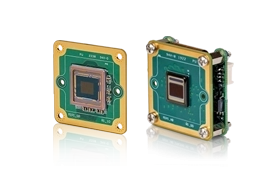
Embedded Vision: Perfect for series applications
All-in-one devices that combine camera, processor, and machine vision. Ideal for reading barcodes and handling simple to moderately complex tasks such as 2D robot guidance in confined environments or standalone operation. Disadvantages: limited customization options, flexibility, and scalability; furthermore, processing power remains the limiting factor.
First things first: Optimize the lighting! The best camera is useless if the lighting is wrong!
Even though these explanations sound complicated, there is a simple path to the right decision:
Sensors / Smart cameras can usually be rented and are easy to test. If you get your application up and running in the lab within 1–2 days, these systems are likely a good fit. If it doesn't work in 1-2 days, stop! The software on these systems is limited, and if it doesn't run smoothly under lab conditions, it will be even more difficult in the production environment.
If you encounter the difficulties mentioned above, industrial cameras are the right choice. In this case, consult specialists to select the appropriate software. Industrial cameras can be very cost-effective, especially for multi-camera systems.
If your application is to be repeated identically 50+ times or low power consumption is important, embedded systems may be the solution. Rule of thumb: First, build a prototype with industrial cameras and get the application running reliably. Only when it is clear that no further functions will be changed and the resolution, data rates, and processing power are determined, switch to embedded. As with industrial cameras, it is advisable to consult a specialist to choose the right embedded platform.
Quick Overview – which solution for which task
Sensors
+ simple presence check / distance measurement
– no machine vision or visualization
Smart Cameras
+ space-saving, autonomous inspections
– less flexible, lower speed, limited resolution / customization
Industrial Cameras
+ cost-effective, complex, scalable high-performance systems
– higher setup effort, more initial effort
Embedded Vision
+ 50+ applications, compact, energy-saving, embedded machine vision
– very high integration effort, smaller selection of sensors / components