
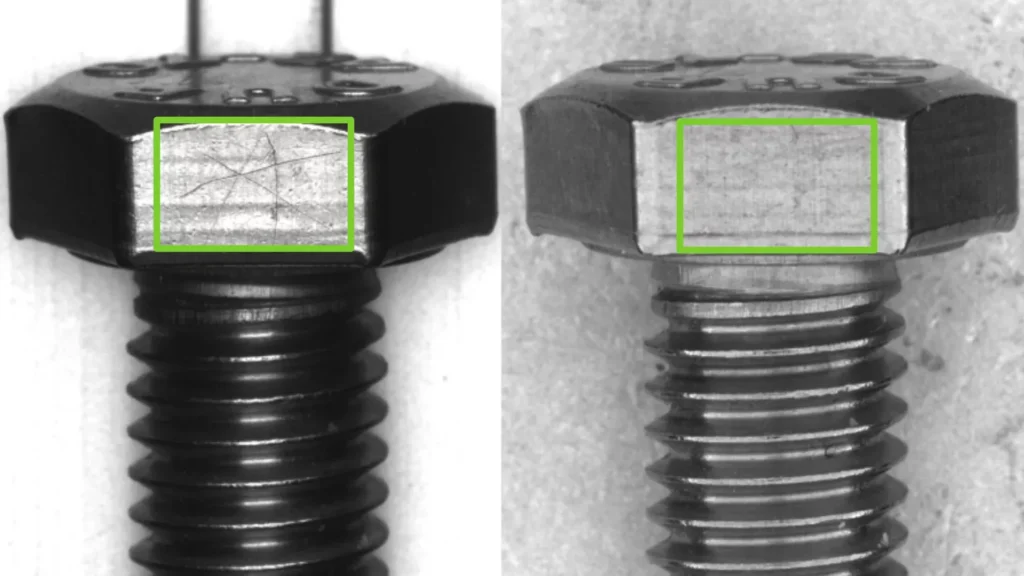
How the geometry of an object influences machine vision performance
Substrate geometry: flat, ribbed, curved
The geometry of the object plays a central role:
- Flat, even surfaces can generally be imaged relatively easily using standard setup configurations (coaxial, dome, area lighting).
- Ribbed, structured, or milled surfaces create strong intensity variations depending on the lighting direction, which can mask or mimic defect contrasts.
- Curved or heavily three-dimensionally shaped parts lead to widely varying angles of incidence and reflection, causing local overexposure and shadowing.
All of this has a direct impact on the placement of the camera and lighting.
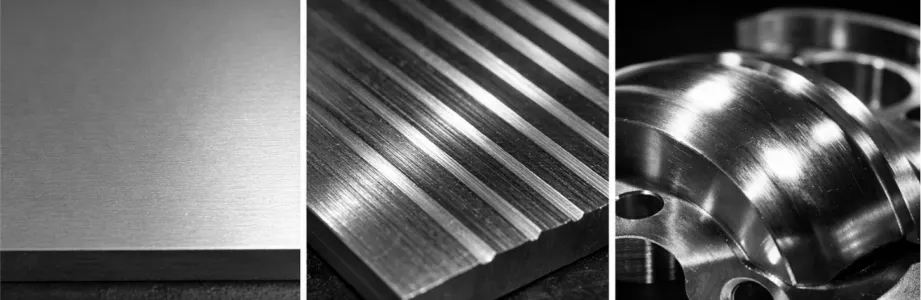
The best lighting strategies for different surfaces
- For flat surfaces, the optical axis can often be aligned almost perpendicularly to the object. The lighting should then be chosen to emphasize specific reflective or diffuse components (e.g., coaxial or dome lighting).
- For ribbed structures, a combination of multiple lighting directions is often useful to minimize direction-dependent effects. Alternatively, targeted oblique lighting can highlight certain edges while suppressing others.
- For curved parts, a point light source is almost always problematic. Large, highly enclosing light sources (domes, large area lights, large-diameter ring lights) or multiple or moving lighting positions are generally more robust.
Especially for AI applications, it should be avoided that purely geometry-related artifacts (e.g., hotspots on curved areas) are learned as defects. A geometry-aware lighting concept is therefore essential.
Optical properties: matte, reflective, transparent
In addition to geometry, the optical properties of the substrate determine the path of the light:
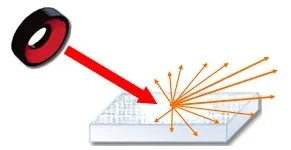
- Matte, diffusely reflecting surfaces scatter light largely independently of the angle of incidence. Contrast is primarily created by differences in reflectance.
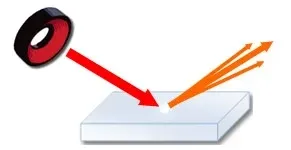
- Reflective, glossy surfaces adhere more strictly to the law of reflection. Small changes in angle can lead to significant differences in intensity.
- Transparent or translucent materials also introduce transmission, refraction, and volume scattering into the equation.
All of this has a direct impact on the choice of lighting:
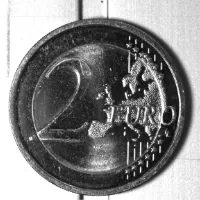
Glossy surface
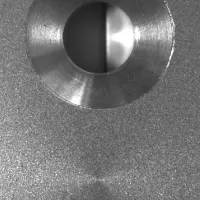
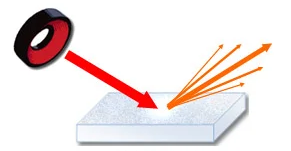
Brushed surface
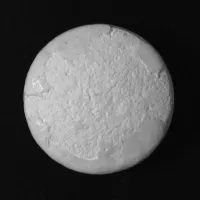
Matte surface
Selecting the perfect lighting for different materials
- Matte surfaces: The goal is homogeneous, stable lighting with a high signal-to-noise ratio. Area lights, diffusers, and potentially polarization filters on both the light source and the lens help reduce residual reflections.
- Glossy surfaces: Here, a conscious decision must be made as to whether the specular component should be utilized or suppressed. Coaxial lighting is well-suited for illuminating flat, mirror-like areas with uniform brightness while making defects (such as scratches and residue) stand out in contrast. Conversely, flat panel or dark-field lighting emphasizes edges, scratches, and topographical flaws.
- Transparent / translucent surfaces: Transmitted light setups are often useful for making edges and inhomogeneities visible. For surface defects, oblique or coaxial lighting helps—potentially combined with polarization—to control disruptive ambient reflections.
The camera position is closely tied to the material properties: if the specular reflection is deliberately utilized, the camera should be positioned in the direction of reflection. If reflection is unwanted, however, the optics are intentionally angled away from these directions.
Homogeneity vs. variability: Rust, aging, and environmental factors
Particularly challenging are scenarios where the substrate itself varies significantly—either locally within the object or globally across different objects. Typical examples include:
- Rust on metal parts stored outdoors
- Weathered railway ties
- Surfaces altered by dirt, moisture, or biological influences
Here, several effects overlap:
- Geometric changes (chipping, roughening, wear)
- Optical changes (color shifts, altered roughness, and thus modified reflection properties)
- In some cases, pronounced inhomogeneity both within a single object and between different samples

Why consistent lighting is crucial for AI models
- "Ideal reference images" with perfect homogeneity are practically impossible. Instead, the setup must be as robust as possible against these variations.
- Large, diffuse light sources (domes, large area lights) help prevent extreme local reflections and average out microscopic roughness.
- A carefully chosen angle of incidence can ensure that rough, corroded structures remain visible without every rust spot dominating the image when the focus is actually on other defects (such as cracks or structural damage).
Temporal stability also plays a role:
- Outdoor systems are exposed to changing light conditions, dirt, and moisture.
- Shielding against ambient light, robust and encapsulated lighting units, and regular recalibration (using reference targets if necessary) are crucial.
AI models benefit greatly when the lighting consistently maps the normal variability of the substrate, ensuring that true anomalies can be reliably detected despite heavily fluctuating surface conditions.
Arrangement of camera and lighting: The most important decision in system design
All the aforementioned aspects converge on one central decision: the position of the camera and lighting in 3D space.
Depending on the surface and the type of defect, different configurations are required:
- On-Axis vs. Off-Axis: Is the light coupled along the optical axis (coaxial), or are angled light sources used?
- Ring, line, area, or dome lighting: Should the light be strongly directional or broadly distributed?
- Static vs. sequential setups: Is one lighting configuration per shot sufficient, or are multiple variants required in succession to make different defects and surface effects visible?
Multiple lighting for robust AI inspection – better data for better decisions
With highly variable or complex substrates, it is often advisable:
- to capture the scene with multiple differently oriented light sources,
- to generate several images using different lighting setups (e.g., a combination of dark-field, coaxial, and dome lighting),
- to fuse these images into a combined "illumination image" (e.g., channel-wise, using max/min operations or weighted averaging),
- and only feed this derived multi-illumination image into the AI model for evaluation.
This makes the inspection less sensitive to local outliers (hotspots, shadows) and helps both classical and AI-based methods better distinguish relevant intensity patterns from those caused exclusively by material and lighting effects.
Why an understanding of physics is crucial for AI-supported machine vision
A careful analysis of the geometric and optical properties of the substrate is therefore not a theoretical luxury, but the foundation of any robust machine vision solution.
Anyone who skips this step and "simply selects a camera" risks
that both classical algorithms and AI models will never be able to reach their full potential.