
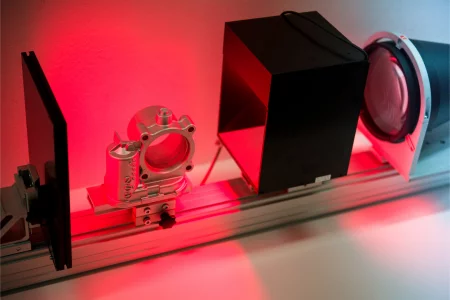
Why does reflected light retain information in every machine vision system certainly
Light = Information
Take the color black, for example. Technically speaking, black is nothing other than the absence of light. Polar bears, for instance, have black skin not so we can recognize them, but because it absorbs light instead of reflecting it. The absorbed energy is converted into heat.
This is a striking reminder that light is the central key in industrial machine vision. To extract meaningful information from an image, the lighting must be designed so that the desired photons reach the sensor while the unwanted ones stay out.
How often do we really think about this?
Let's be honest. When building a machine vision system, do we actually ask ourselves: "How do I shape the light? What should be reflected, and what should not appear in the image at all?" Or do we sometimes marvel at a seemingly good image that ultimately fails to contain the crucial data we needed?
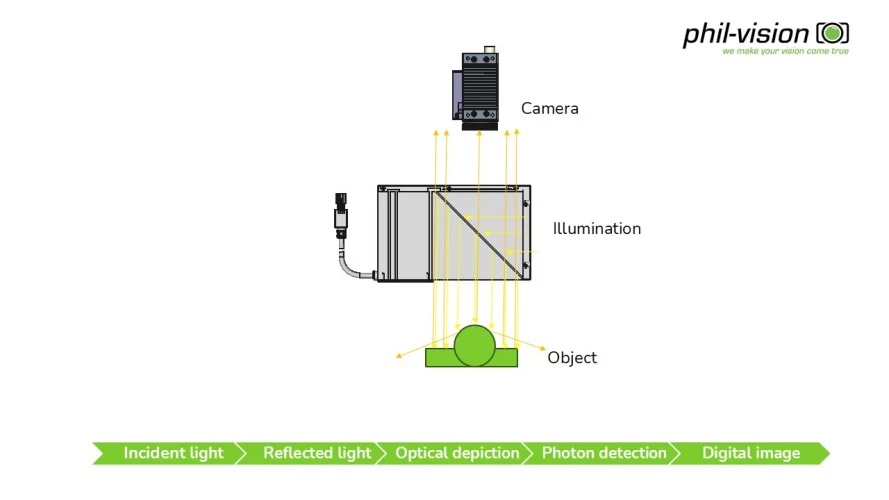
Conclusion: Follow the path of light
Ultimately, it all comes down to this. Those who understand and consciously design the path of light create the foundation for reliable and meaningful image data.
Typical lighting errors that distort your data
- Too diffuse or uncontrolled lighting
- Reflections and glare
- Shadows and absorption
How consciously do we design the lighting in machine vision?
- Have we chosen the right type of lighting? Direct, diffuse, dome, ring – every option has its place, depending on the surface.
- Are we paying attention to the correct angle? The angle of incidence influences where the light falls... cameras only see what is reflected back.
- Do we understand the material? Matte vs. glossy, transparent vs. opaque... everything influences how light behaves.
- Are we thinking about the sensor and optics? Lighting, aperture, filters... without good lighting, you cannot compensate for anything.
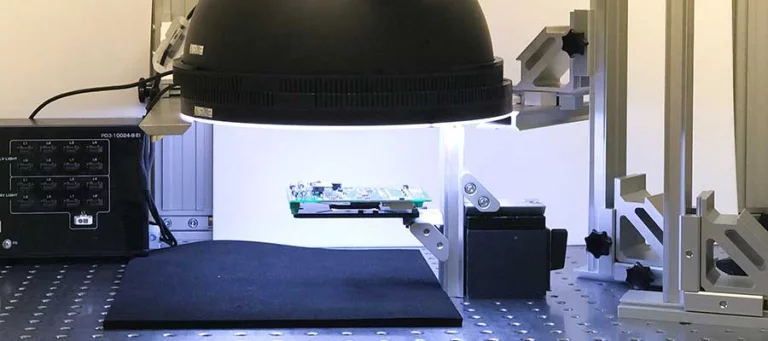
Why every setup of a machine vision system should start with lighting
The next time you set up a camera system, do not start with the sensor specifications or the software. Start with the lighting.
Ask yourself:
What information is not making it back into the image?
Because ultimately, we do not capture reality, but rather reflected light.