
Is AI really the holy grail we've been searching for forever?
AI is powerful, but not magical. That said: AI can be an extraordinarily powerful tool in industrial machine vision. Particularly for products with high variance, features that are difficult to describe formally, or complex surface structures, it offers possibilities where conventional methods reach their limits. When used correctly, it can significantly improve robustness, flexibility, and recognition performance. What AI cannot do, however, is fundamentally [...]
The biggest enemy for AI in machine vision: Physics
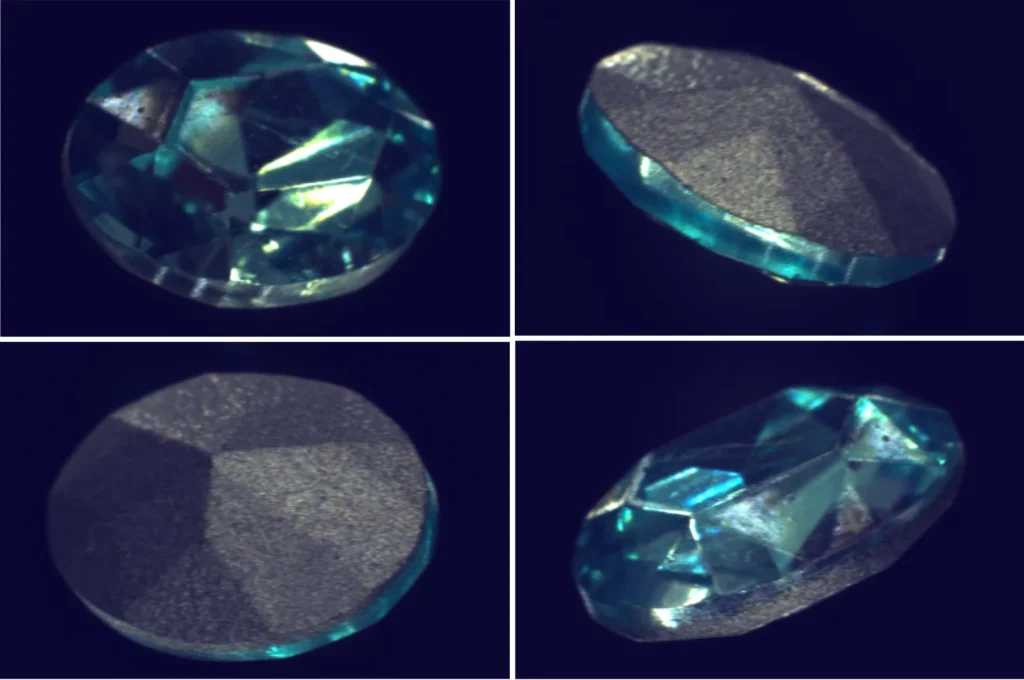
How object geometry influences machine vision performance Substrate geometry: flat, ribbed, curved The geometry of the object plays a central role: All of this has a direct impact on the placement of the camera and lighting. The best lighting strategies for different surfaces Especially for AI applications, it is important to prevent purely geometry-induced artifacts (e.g., hotspots […])
How to make features visible
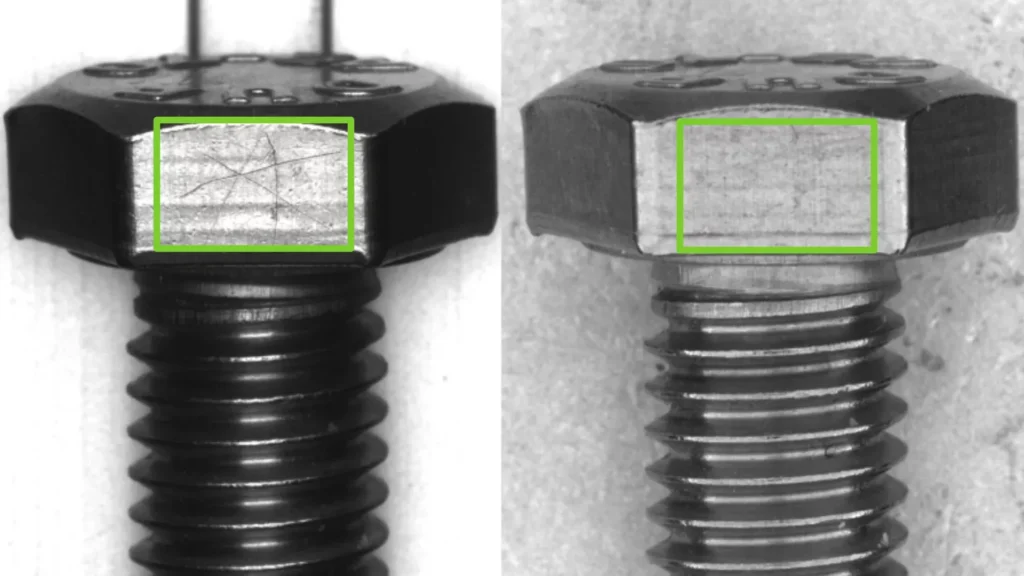
Why optical properties are so critical: The way a feature reflects, scatters, absorbs, or transmits light directly determines whether it appears as contrast in the image or is lost in noise or reflections. AI models are ruthlessly honest about this: What isn't clearly present as a signal in the image, the model cannot reliably distinguish. Essentially, […]
The Spatial Distribution of Features
Integration into existing production facilities machine vision system Optical inspection systems almost never originate on the drawing board without constraints. Typically, they are intended to be integrated into an existing system. Installation space, cycle time, mechanics, and process control are already defined. And sometimes it quickly becomes apparent: physics cannot be outsmarted. If only 100 mm of installation space is available, but at the same time a test area […]
Why the quality of image data determines AI performance
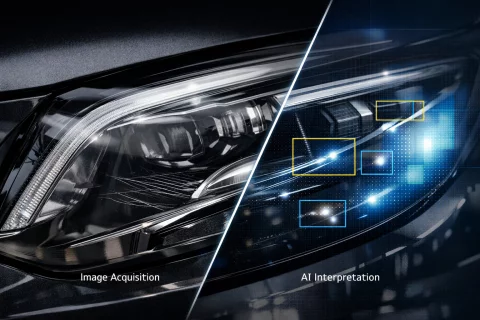
AI in the machine vision Despite all the progress, one old principle still applies: garbage in, garbage out. An AI model can only be as good as the image data it receives. This inevitably raises the question: how do I optimize my image capture to create the basis for stable and reliable results? The foundation: lighting, optics, and camera […]
Incident light or transmitted light? Why lighting determines what we measure.
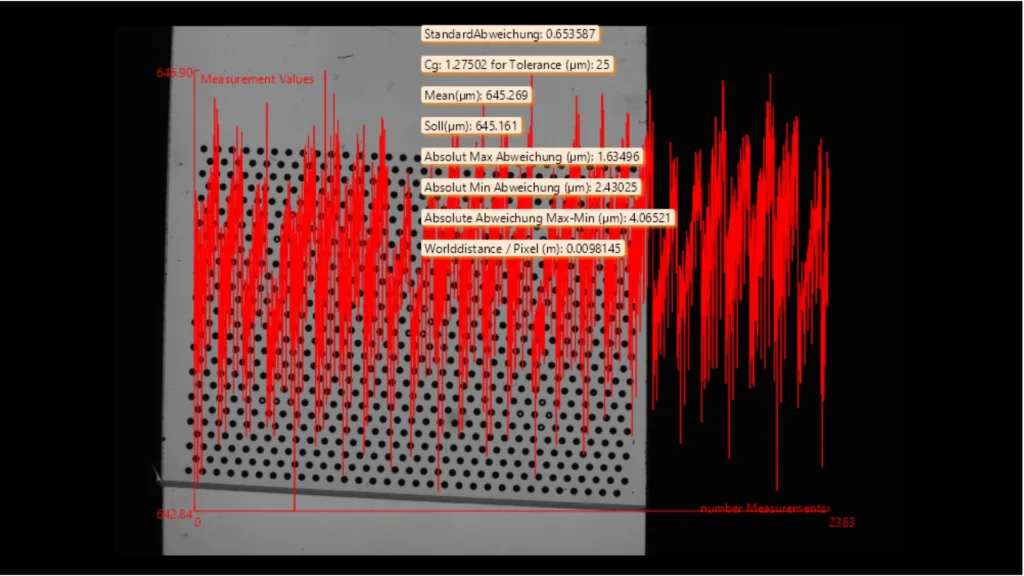
The setup: Same hardware, same reference. For this comparison, we set up and calibrated a system with a 20MP camera and a 50mm lens. Using a calibration target with 150 nm accuracy, we were able to demonstrate that the system achieves a measurement capability of ±12.5 µm. With this setup, we then measured an object, a shim plate, which we had previously had measured. […]
Why feasibility studies are indispensable.
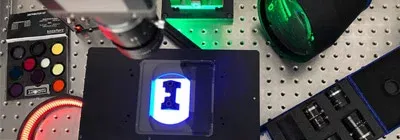
Even today, I make one or two mistakes in every single design. I oversimplify things, overlook a parameter, or neglect an effect that later comes back to haunt me in the actual production environment. Typical examples include: and much more… This isn't a sign of incompetence. It's the reality of complex technical systems. […]
Transmitted Light Illumination – Precision Begins with Clear Edges
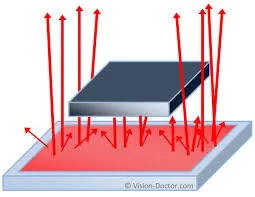
More than just attendance tracking. Of course, transmitted light is frequently used for simple tasks, such as attendance tracking or position determination. And it is perfectly suited for these purposes. However, transmitted light truly shines in measurement applications. When edges need to be detected with absolute reliability and precision, there is hardly anything else that will do. That's why transmitted light is our first choice whenever possible […]
Lighting in machine vision – Front lighting and diffused light
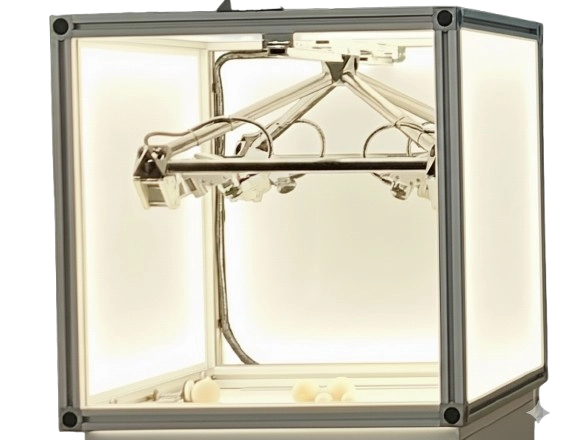
Why Diffuse Light Works So Well: Photographers used to often talk about a "cloudy day" as ideal for taking pictures. This meant a uniformly overcast sky. The light comes softly from all directions. It is precisely this characteristic that makes diffuse light so valuable. Applied to... machine vision This means that only when light hits an object from as many directions as possible does it exist at every […]
How light affects image data in industrial machine vision
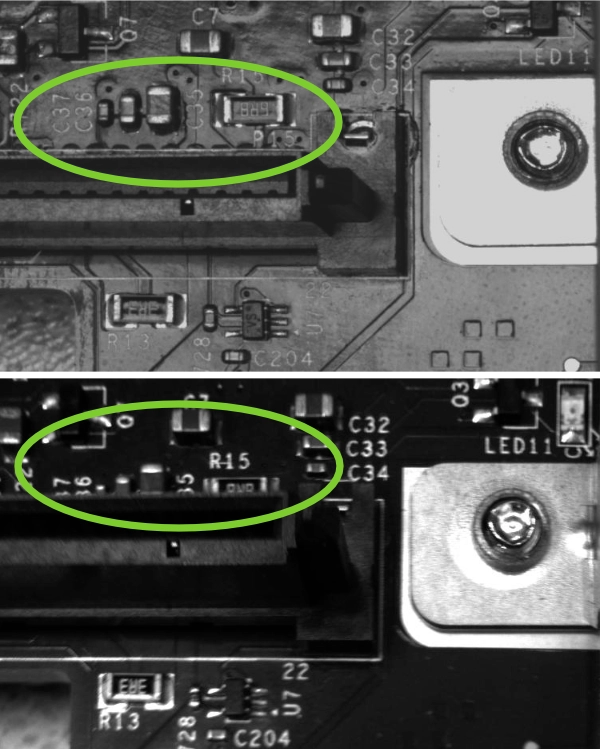
When you place a camera directly above an object, it's logical to assume you're viewing it from above. Sounds reasonable, right? But here's the crux of the matter: there are situations, especially when using wide-angle lenses, where you see the object almost from the side, even though the camera is positioned exactly above it. You […]