
Creating image data for industrial machine vision
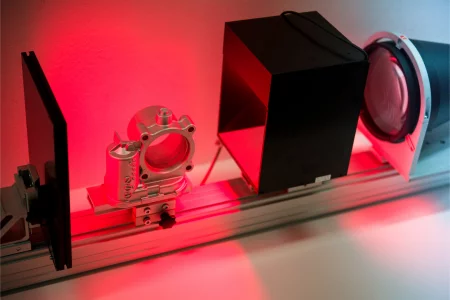
Why does reflected light retain information in every machine vision system Definitely light = information. Let's take the color black as an example. Technically speaking, black is nothing more than the absence of light. Polar bears, for example, have black skin, not because we can see them, but because it absorbs light instead of reflecting it. The absorbed energy […]
Develop machine vision yourself or work with a system integrator?
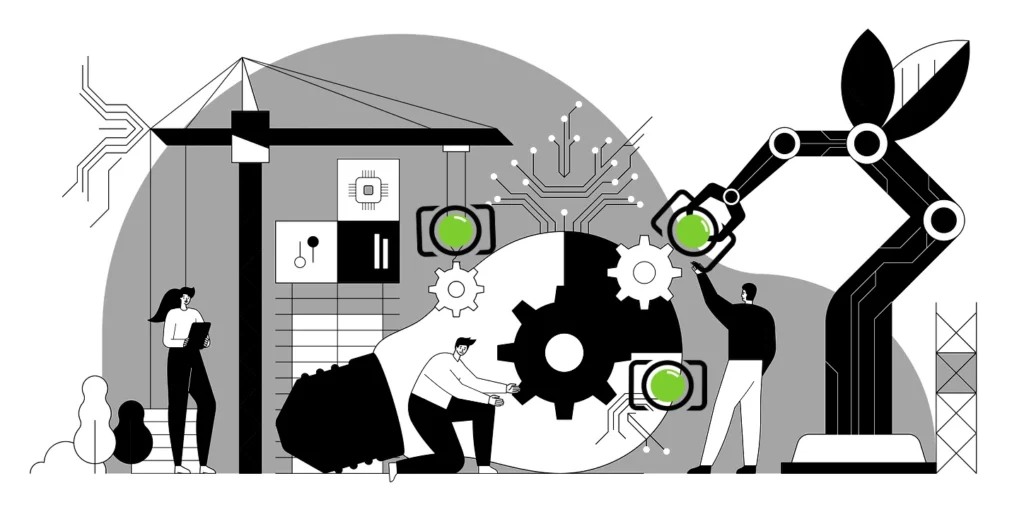
If you're unsure, it's worth asking yourself: Why not leverage the experience of a systems integrator? An experienced systems house can help you: develop complete solutions for your automation or quality challenges; implement the system from planning to installation in the production environment; what a systems integrator brings to the table; how to choose the right partner; evaluate potential systems integrators based on the following criteria […]
The limits of artificial intelligence
Artificial Intelligence (AI) in the machine vision Artificial intelligence is a field of research that aims to develop machines capable of learning, planning, and solving problems using intelligent algorithms. An AI-based system is trained on a large number of examples and then attempts to generalize what it has learned to new problems, particularly in industrial applications. machine vision for example, the entire variance […]
Why a smartphone camera is not enough for industrial machine vision
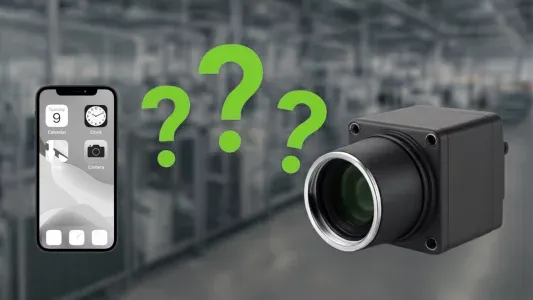
But what makes industrial cameras so much more powerful? Lighting = half the battle. Reliable image analysis requires defined, uniform, and powerful lighting. Smartphones mask fluctuations using software, which looks good visually but leads to technically inconsistent results. Precision instead of filter effects. Industrial cameras use global shutter sensors, ideal for moving processes and measurement tasks. Smartphones, on the other hand, almost always use rolling shutter […]
Which technology is best suited for which application?
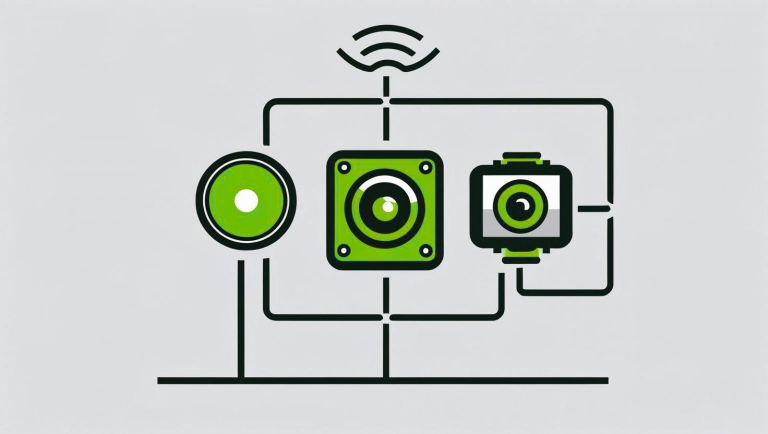
When someone asks me which technology to use, my answer is simple (and never changes): IT DEPENDS. Sensors: Fast and robust. Ideal for simple yes/no decisions, low resolution, and basic applications. Quick to set up, easy to use. Particularly suitable for applications that don't require high computing power. If all you need is simple […]
From vision to reality
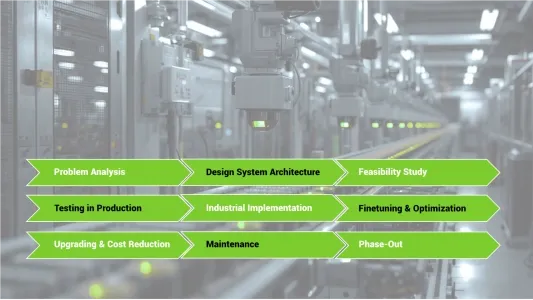
Every project begins with a challenge. When customers come to us, they rarely ask for "a vision system." Instead, they ask: Can we reliably detect this defect? Count this? Accelerate this inspection? Automate a control process that can no longer be scaled by humans? Increase yield? Reduce the costs of quality control? This is precisely where real engineering begins. […]
The challenges of machine vision in industrial automation
What happens behind the scenes? What really happens in those crucial milliseconds between trigger and decision? Join me for a glimpse behind the curtain to discover the technical interplay that makes this apparent simplicity possible in the first place: Lighting Engineering. It's not just about avoiding shadows and reflections. The light must be designed and […]