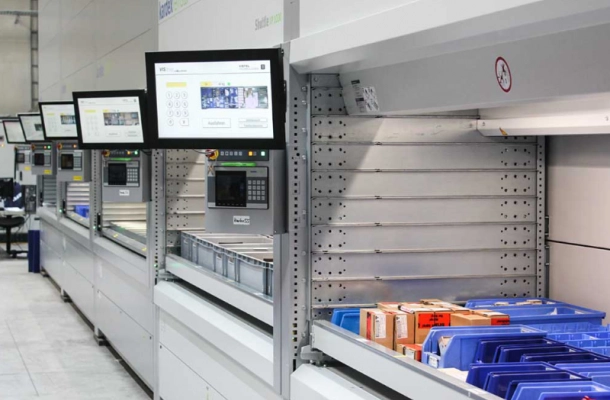
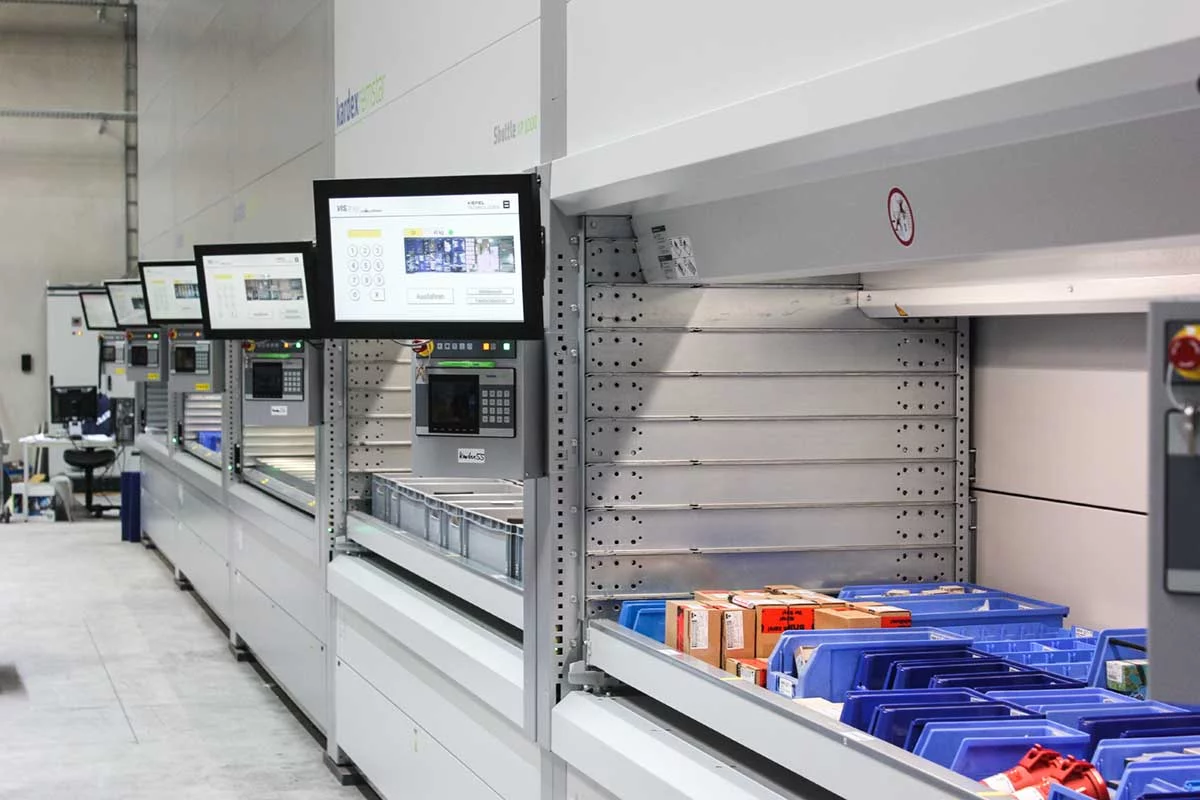
Since storage space is becoming increasingly expensive, it is necessary to use it as efficiently as possible with high-bay systems. For Kiefel GmbH, which belongs to the Brückner Group, phil-vision, in close cooperation with Kardex, has developed a solution for the maximum utilization of available space with the VIS.tray system, which is optimally integrated into the Kardex high-bay towers.
Kiefel GmbH stores up to 14,000 parts, for example, in a high-bay system at the Freilassing site on around 1400 m² of storage space with a footprint of 120 m². More storage space on a smaller footprint than previously possible and making storage more convenient were the main goals for switching to a high-bay system from Kardex. A challenge in the design of the system was the variety of goods to be stored, which vary greatly in type and size ranging from stickers and small parts to tools, motors, and bulk goods.
Size and weight must fit
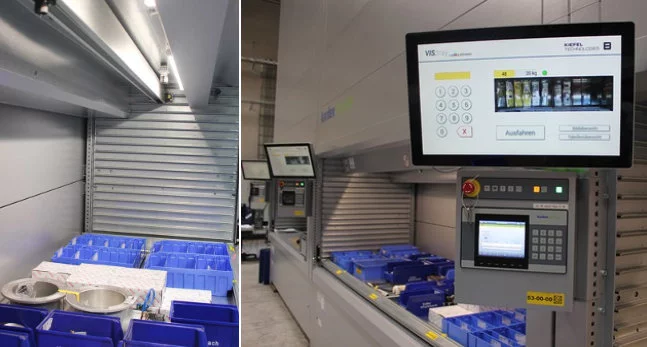
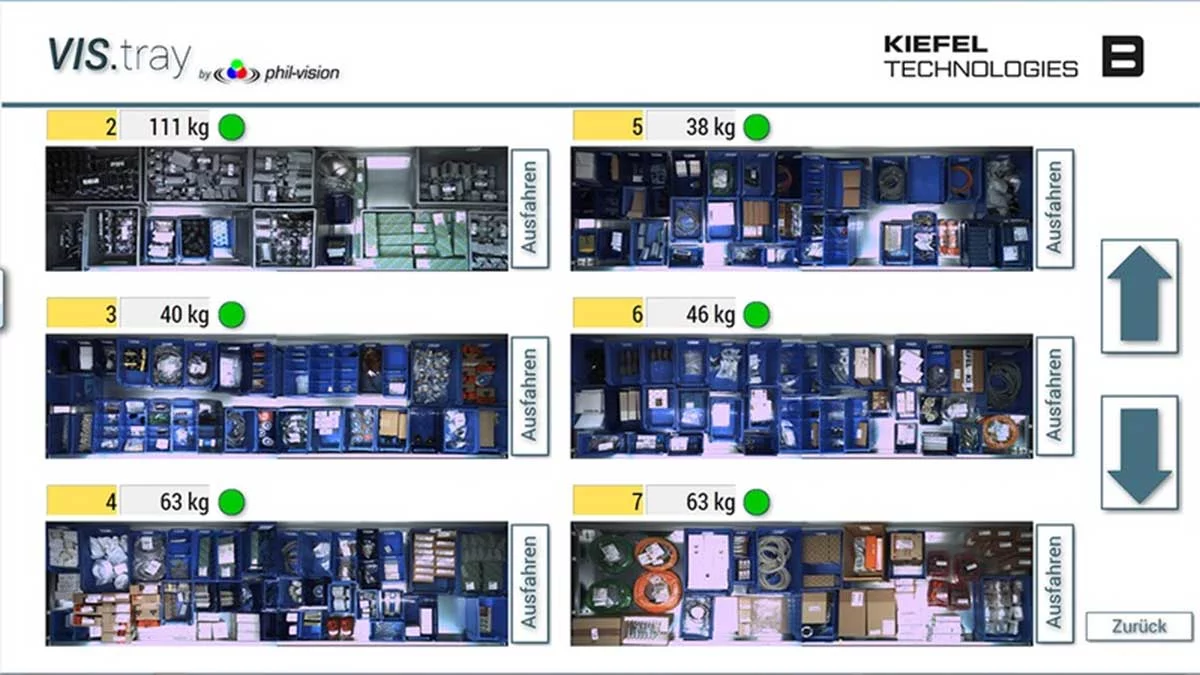
Since there was no standard system for detecting free space, phil-vision developed a machine vision system to identify the free space on the shelves. During the storage process, images of the current load status are captured, and the load weight is retrieved via the high-bay warehouse's control system. The system calculates the current weight of each shelf based on the power consumption of the motors that move the shelves in and out. The difference between the maximum and current load determines the maximum weight a new item may have when being stored.
The images of the trays as well as the information about the load are stored in a database, so that employees can very easily decide by scrolling through the images on which tray there is enough space for storing new parts. If the sum of the already stored weight and the newly added parts is below the maximum permissible load, the employee can request the selected tray with one click via a connected touch panel PC and store the new parts.
Before the tray with the new goods moves back into the high-bay warehouse, a new image is taken and saved in the database by overwriting the previous image. In this way, all images are always up to date.
Standard components for image acquisition
The choice of suitable machine vision components for integration into the Kardex towers was not trivial, since on the one hand the entire width of the trays of around 300 x 80 cm had to be captured, and on the other hand the space for attaching the cameras was limited and the distance to the objects was relatively short.
The solution relies on a system of two color cameras with fisheye lenses, which is connected via GigE Vision to the embedded multi-touch PC of the respective high-bay tower. However, the images captured by the system are distorted due to the lenses and must first be corrected with a special algorithm and then stitched together. These 'stitched' images then show the entire storage area of the respective tray undistorted and in color, and are stored in the system.
User interface according to customer requirements
The control between the high-bay warehouse and the image acquisition system proved to be complex during installation. Close cooperation between phil-vision and Kardex was required here to implement the system according to all of Kiefel's wishes.
The clear representation of the space and weight conditions on the trays contributes greatly to the fact that free storage locations for newly stored parts are found very quickly. Since this process saves a lot of time, the storage system was very quickly accepted by everyone involved.
Potential operating errors can also be easily corrected in this way. If a part is accidentally stored without being scanned beforehand, finding this part again is possible without any problems and in a time-saving manner by simply checking all current images on the monitor.
More interesting application reports
Automated wall production for prefabricated houses
Automated tool recognition and measurement based on AI and 3D machine vision
High-precision hole detection in steel strips with machine vision
Visual inspection of cooling boxes for the pharmaceutical and food ndustriy
Seal inspection of food packaging
Perfect printed coins thanks to machine vision
Perfect fold quality through machine vision
High-speed video recordings:
Optical measurement and inspection of rubber seals
Bird-tracking System for wind turbines