
The story behind phil-vision

The real story begins back in 2010 in Portugal. At that time, Gregor Philipiak had an idea, but put it on hold to work on a football tracking project that seemed more exciting back then. Five years later, this project came to an abrupt end. A setback? Yes. But also the moment when a long-cherished vision became reality. Because one thing […]
The biggest enemy for AI in machine vision: Physics
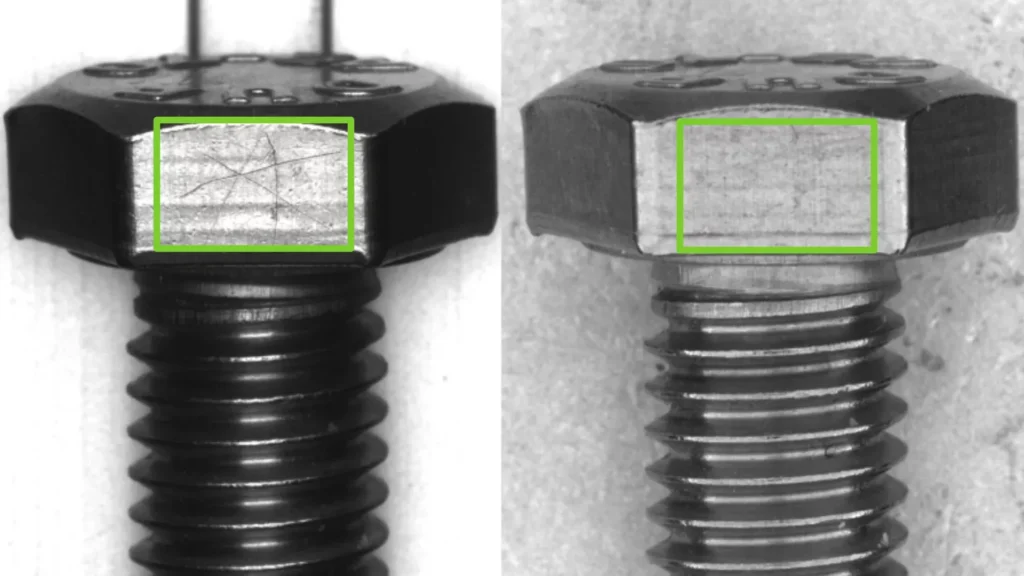
How object geometry influences machine vision performance Substrate geometry: flat, ribbed, curved The geometry of the object plays a central role: All of this has a direct impact on the placement of the camera and lighting. The best lighting strategies for different surfaces Especially for AI applications, it is important to prevent purely geometry-induced artifacts (e.g., hotspots […])
Pixels, projects, precision – Gregor

From Independence to Innovation: I've always seen pixels differently. Not as tiny colored dots on a screen, but as building blocks for solving real problems. In 2015, I took the plunge into independence, relying solely on myself, my curiosity, and the firm belief that there's a solution for every challenge in the world. machine vision A solution exists, just waiting to be discovered […]
How to make features visible
Why optical properties are so critical: The way a feature reflects, scatters, absorbs, or transmits light directly determines whether it appears as contrast in the image or is lost in noise or reflections. AI models are ruthlessly honest about this: What isn't clearly present as a signal in the image, the model cannot reliably distinguish. Essentially, […]
4 cubic meters, 8 seconds, 0.1 mm – Patrick

More than just components: Complete image processing solutions. I've never been interested in individual components alone, but always in the solutions. While others are still discussing specifications, I'm already sketching out the system that will ultimately work. At phil-vision, I'm not only the managing director, but also the system architect. Together with our customers, I develop customized solutions, select the right components and algorithms, and […]
The Spatial Distribution of Features
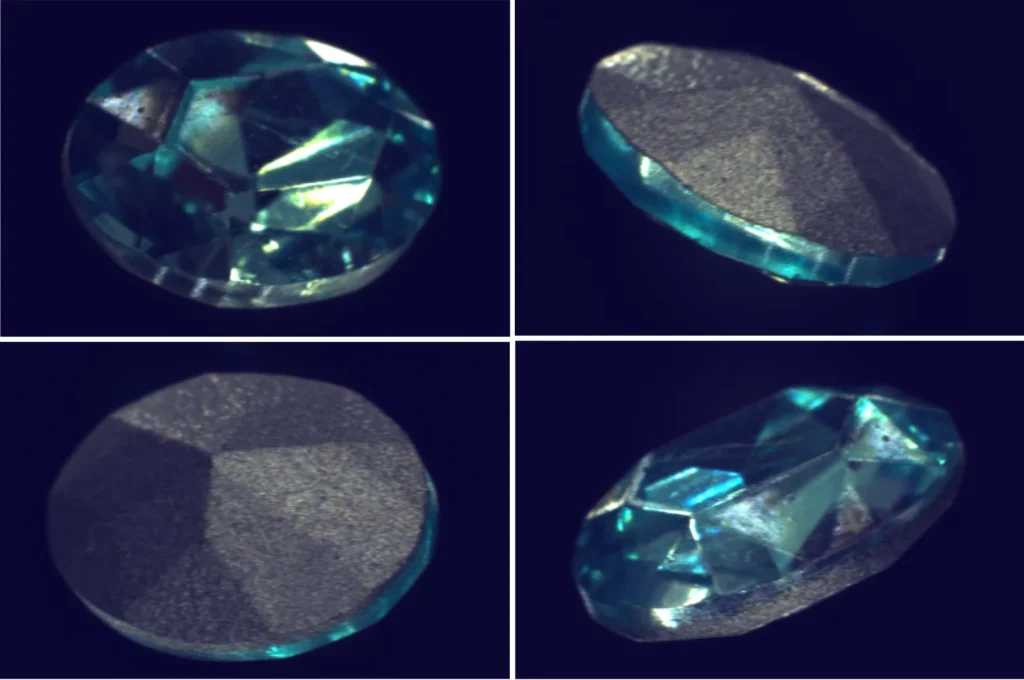
Integration into existing production facilities machine vision system Optical inspection systems almost never originate on the drawing board without constraints. Typically, they are intended to be integrated into an existing system. Installation space, cycle time, mechanics, and process control are already defined. And sometimes it quickly becomes apparent: physics cannot be outsmarted. If only 100 mm of installation space is available, but at the same time a test area […]
Standards, Stability & Security – Rupert

My view on the machine vision Industrial machine vision This has been my world for years. What continues to fascinate me is the combination of technical precision, stable infrastructure, and the ability to develop system solutions that operate reliably even under extreme conditions. While many are focused on the latest AI breakthrough or state-of-the-art sensors, I'm driven by a different challenge: robust […]
Why the quality of image data determines AI performance
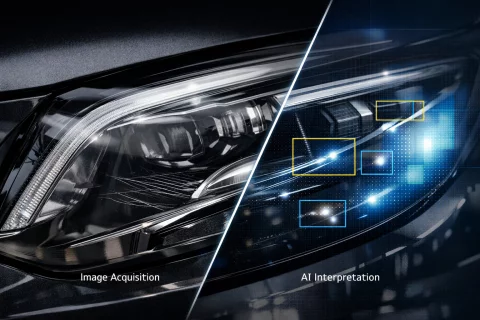
AI in the machine vision Despite all the progress, one old principle still applies: garbage in, garbage out. An AI model can only be as good as the image data it receives. This inevitably raises the question: how do I optimize my image capture to create the basis for stable and reliable results? The foundation: lighting, optics, and camera […]
When things get tight, things get exciting.
Chaotic? Maybe. But as CEO of an image processing integrator, you're constantly searching for the "perfect" workspace. At our core, we're a software company. And software developers love two things: quiet, beautiful offices and a really good coffee machine. But in the Munich area, it's anything but easy to find a place where you can set up both desks […]
Incident light or transmitted light? Why lighting determines what we measure.
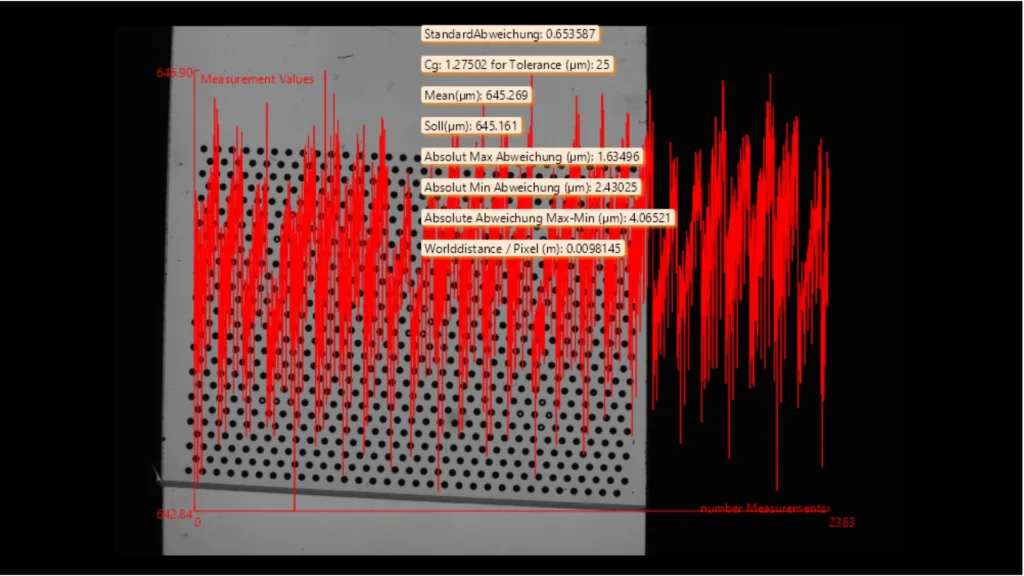
The setup: Same hardware, same reference. For this comparison, we set up and calibrated a system with a 20MP camera and a 50mm lens. Using a calibration target with 150 nm accuracy, we were able to demonstrate that the system achieves a measurement capability of ±12.5 µm. With this setup, we then measured an object, a shim plate, which we had previously had measured. […]