

The right lighting is crucial
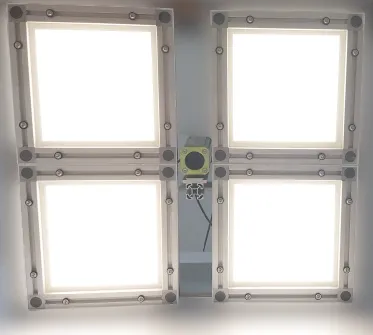
The right lighting is essential for machine vision applications because the amount of light and quality of illumination massively influence the accuracy of the results achieved by machine vision systems.
For example, if an object appears too dark or too bright due to unsuitable lighting, it is usually impossible to reliably recognize the object's features or accurately measure its size or position.
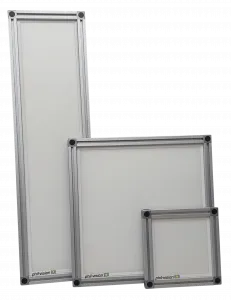
Using a mobile phone with built-in lighting is therefore extremely challenging. The phone's lighting can only emit a certain amount of light, making it often impossible to achieve the desired illuminance. Additionally, it is difficult to ensure that the light intensity does not vary across the entire field of view. Using external lighting with a mobile phone is also difficult because the mobile camera cannot be synchronized with external lighting, and the use of continuous light is only possible to a limited extent.
The importance of a repeatable, robust setup
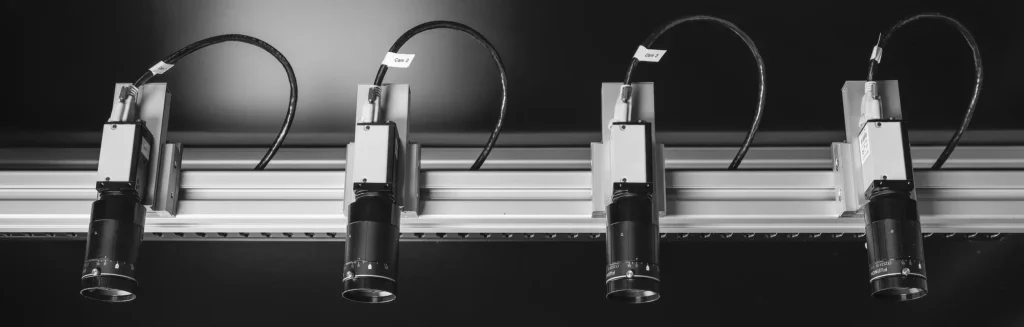
A reproducible, robust setup is essential for image processing applications . The environment in which the machine vision system The work must be consistent and reliable in order to achieve meaningful results.
Using a mobile phone as part of a machine vision system is therefore extremely difficult, especially when it comes to achieving repeatable and reliable results. Since mobile phones are sensitive to their environment and can be easily affected by changes in temperature, humidity, and other external factors, a robust inspection system setup is virtually impossible. Moreover, due to their size and weight, mobile phones can be easily moved or displaced, further complicating the creation of a repeatable and robust inspection scenario.
Similarly, the fact that a mobile phone is guided "by hand" directly to the defect, held in various directions until a good contrast of the defect is achieved, and then used to capture a high-resolution image where the defect nearly fills the frame creates a great snapshot, but makes a reproducible setup impossible and is inapplicable even in slower production processes.
Capturing moving objects

Mobile phone cameras are exclusively equipped with rolling shutter sensors. Unless these sensors are used with very specific strobe lighting, they are generally unsuitable for measurement tasks where objects move quickly, as the capture times differ between the first and last lines. In industrial machine vision,global shutter sensors are used for this purpose, which are not available in mobile phones.
Different lenses and focal lengths to match object size and field of view
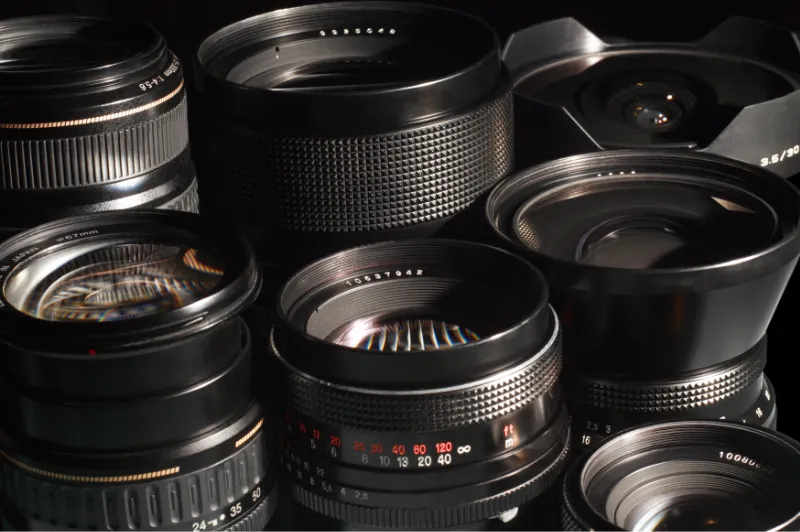
Depending on the size of an object or the field of view, machine vision applications require different focal lengths and lenses. For example, if you are working with an object of large dimensions, you need a shorter focal length to capture it in its entirety. Conversely, if you are working with a small object, you need a longer focal length and a macro lens to recognize small details on the parts being inspected.
Since most mobile phones only have a fixed focal length, this severely limits their applications. And even if you manage to attach different lenses to your mobile phone, there is no guarantee that they will work properly, as they may not be compatible with the mobile phone's camera sensor.
Long-Term Availability
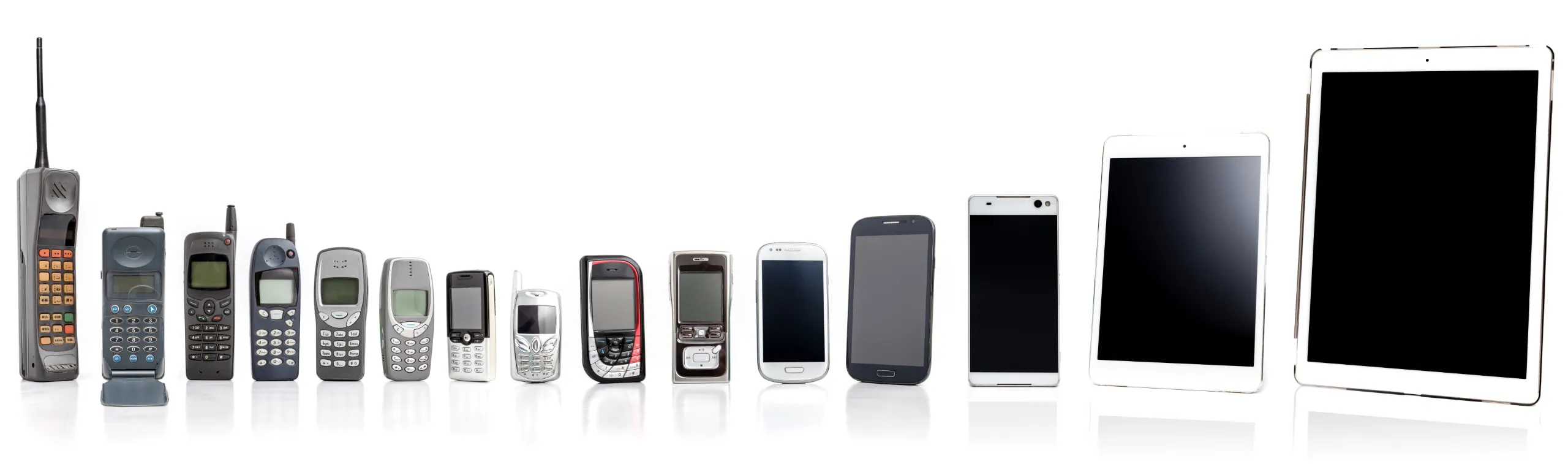
Machine vision solutions for industrial use must be stable, and the components used should ideally be easy to replace even years later. This is impossible with mobile phone-based solutions, as a phone bought today is essentially already outdated again.
Conclusion
Perhaps the most important distinguishing criterion is the fact that industrial cameras and consumer cameras are designed for completely different purposes and should be used accordingly. With mobile phone cameras, it is important that the images look perfect to the human eye, and a lot of effort is put into post-processing so that edges, contrasts, and colors appear as realistic as possible to the viewer. In contrast, the image from industrial cameras often appears "flat" to the viewer, but is ideal for measurements.
However, customers often expect image quality similar to that known from mobile phone cameras. Achieving this quality is only possible at significantly higher costs, because the optimization and pre-processing functions required to enhance, denoise, stabilize, or sharpen images, or to correct colors, often have to be re-developed individually and at great expense.
As a result, machine vision often has to make do with lower resolution. However, these disadvantages can be offset, for example, by using multiple cameras or employing dedicated lighting. Furthermore, the robust design and long-term availability make the use of industrial cameras for machine vision applications in industrial environments and 24/7/365 operation without alternative.