
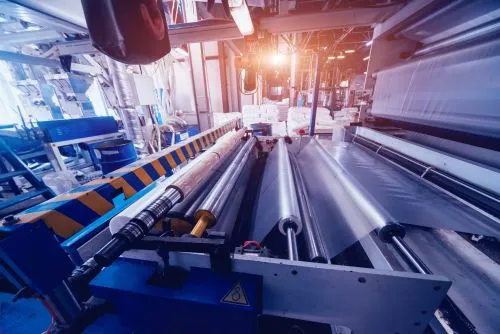
Typical types of defects in film production
During film production, a wide variety of defect types can occur, such as production errors, damage, or contamination, which directly impact functionality or appearance:
- Specks
- Gels (also gel particles or fisheyes)
- Thin spots
- Tears, holes
- Discolorations
- Streaks, orange peel
- Dirt
- Tensions
- Bubbles (in laminated films)
Inspection of packaging films
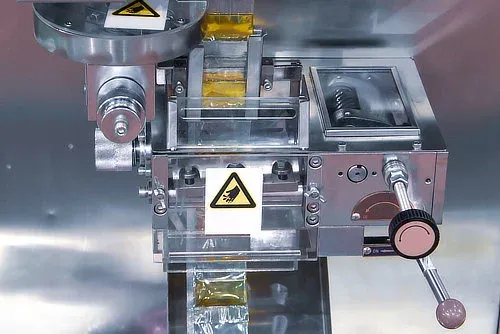
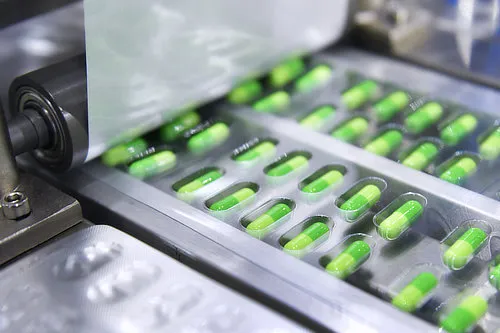
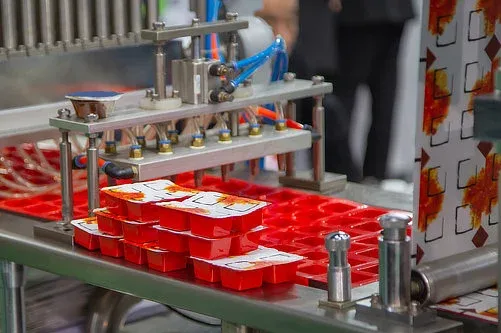
Flexible packaging films of all kinds, in various thicknesses and colors, from transparent to opaque, structured or coated, are used in a wide range of applications – from food packaging to blister packs and baby diapers. Small local defects must be detected just as reliably here as deviations in material properties.
Inspection tasks include checking the homogeneity of the coating and surface structure, reflection, transparency, seal seam inspection, or checking the adhesive distribution. Specks, fisheyes, inclusions, air bubbles, or depressions must be detected just as reliably as contamination.
Continuous inspection makes it possible to detect defects, determine the causes, and at the same time optimize the production process.
Inspection of battery films
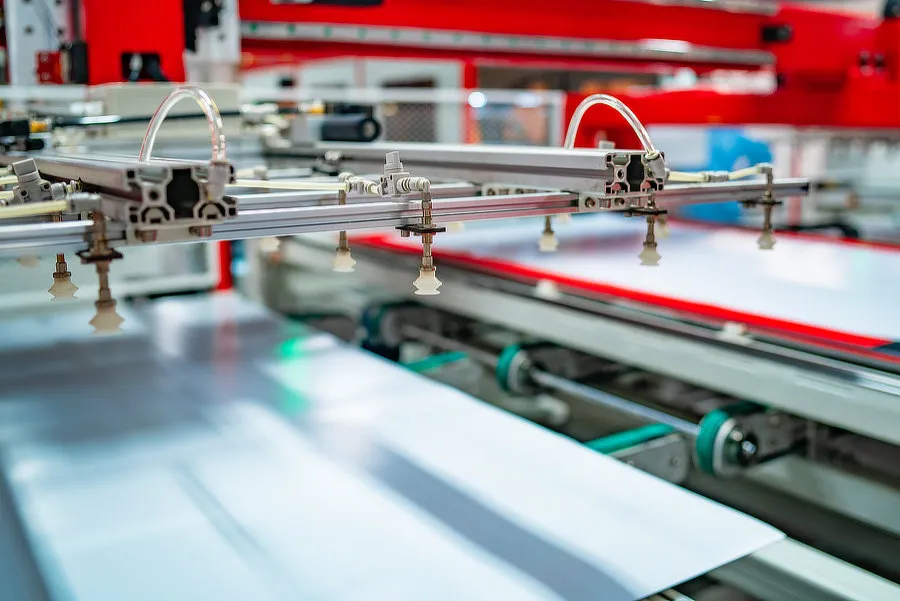
Detecting defects and deviations on battery film materials, such as anodes, cathodes, base battery films, and aluminum packaging films, is arguably one of the most challenging tasks in film inspection. Here, the porosity as well as the thickness of the material and the coating must be checked to minimize waste and ensure that only flawless material is processed further.
Coating defects, inclusion defects, streak defects, particle defects, spots, gels, fisheyes, and air bubbles must be detected just as reliably as scratches, cracks, or wrinkles.
Inspection of polarizing films
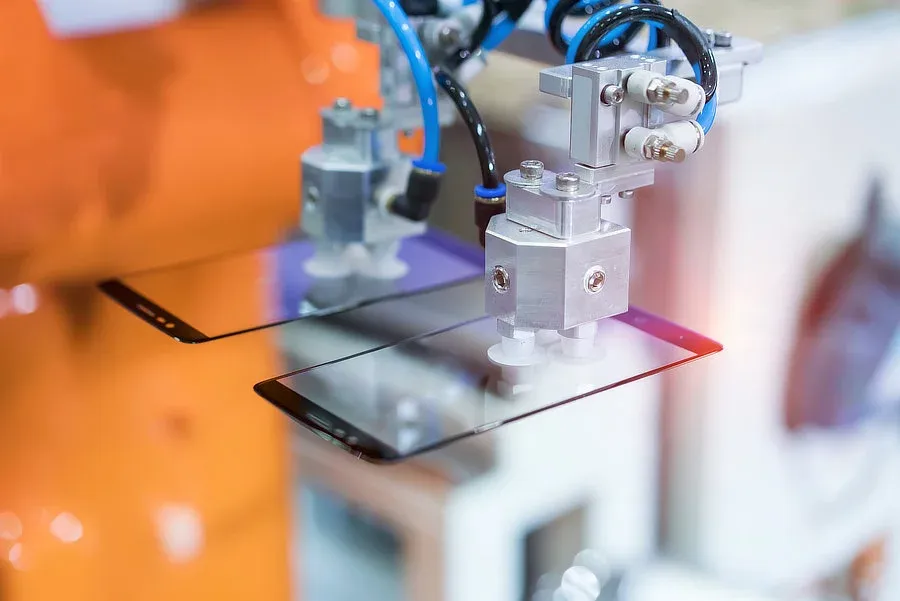
Modern media place the highest demands on the technology used to produce flawless LCD displays. The polarizing films used for this purpose must be perfect since they determine the brightness and contrast of the display. Here, the smallest defects that can occur during manufacturing, lamination, or final processing must be detected. Film properties such as coloration or polarization homogeneity must be reliably detected across all production steps.
Years of experience
The technical requirements for a machine vision-based film inspection system are very high, and combining these with optimal costs requires a great deal of experience. Alongside selecting the right camera(s), lighting, and lens(es), the key factor is the algorithm used. This must not only recognize and classify the surface (structure) but also detect irregularities (Anomaly Detection).
To be able to offer you the right solution, we only need a few details:
- What is the size of the area to be inspected?
- What type of defects need to be detected?
- How large or small are the defects that need to be found?
- How fast is the material moving?